
-
Au-delà de la monogamie et du mythe
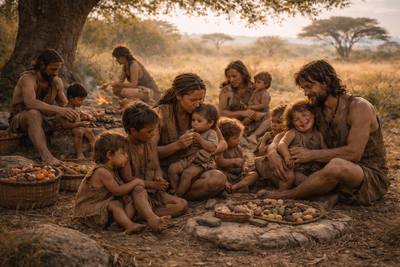
févr. 08Introduction de l'auteur : pourquoi cette question refuse de disparaître Peu de sujets se situent aussi inconfortablement à l'intersection de la biologie, de la culture, de la morale et de l'identité que la sexualité. C'est là que l'instinct rencontre le récit, là où le désir privé se heurte aux attentes publiques. On nous dit souvent, avec une grande certitude, ce qui est « naturel », ce qui est « sain », ce qui est « normal ». Et pourtant, pour un sujet censé être si bien établi, la sexualité humaine génère une quantité extraordinaire de confusion, de culpabilité, de secret et d'insatisfaction silencieuse. Pour beaucoup, cette tension est plus visible en ce qui concerne la monogamie. Bien qu'elle soit érigée en modèle de référence pour l'intimité et l'engagement, la monogamie est aussi la structure relationnelle qui produit le plus régulièrement de l'anxiété autour du désir, de la peur de l'infidélité et un sentiment d'échec personnel lorsque l'attirance s'égare. Cette contradiction est si courante qu'elle est rarement remise en question. Au lieu de cela, les individus intériorisent la lutte, supposant que le problème réside dans leur volonté, leur maturité ou leur sens moral. C'est précisément cette dissonance silencieuse et généralisée qui a fait de Sex at Dawn un ouvrage si perturbateur lors de sa parution. Écrit par Christopher Ryan et Cacilda Jethá, le livre contestait l'un des présupposés les plus ancrés de la société moderne : l'idée que l'exclusivité sexuelle à vie serait le mode par défaut de l'humanité, et que tout écart représenterait une défaillance biologique ou morale. Ce qui a fait la force de ce livre n'est pas seulement son audace, mais son timing. Il est arrivé à un moment où les modèles de relations traditionnels étaient déjà sous pression, où les taux de divorce, les statistiques sur l'infidélité et l'émergence de structures relationnelles alternatives suggéraient que l'histoire dominante était incomplète. Sex at Dawn n'a pas créé ces questions. Il leur a donné une voix que beaucoup de gens reconnaissaient déjà comme la leur. Cet essai n'est pas une apologie d'un modèle relationnel particulier. C'est une tentative de synthèse de ce que Sex at Dawn a apporté, de ce que les recherches ultérieures ont clarifié ou corrigé, et de ce à quoi ressemble aujourd'hui une compréhension plus intégrée de la sexualité humaine. L'objectif n'est ni la rébellion ni la nostalgie, mais la cohérence. Comprendre d'où viennent nos instincts sexuels, comment la culture les a façonnés, et ce que cela signifie pour l'intimité dans le monde moderne. La thèse centrale : la sexualité avant l'agriculture Au cœur de Sex at Dawn se trouve une proposition simple mais troublante : pendant l'essentiel de l'histoire évolutive de l'humanité, l'exclusivité sexuelle n'était pas le principe organisateur de la vie intime. Selon Ryan et Jethá, nos ancêtres vivaient dans de petites bandes de chasseurs-cueilleurs égalitaires où les relations sexuelles étaient relativement fluides, les liens communautaires forts, et où les notions rigides de possession des partenaires n'avaient que peu de pertinence. Cette affirmation s'oppose directement au « récit standard » de la psychologie évolutionniste. Selon ce récit, les hommes auraient évolué pour chercher des partenaires multiples afin de propager leurs gènes, tandis que les femmes auraient évolué pour chercher des protecteurs fiables afin d'assurer la survie de leur progéniture. La monogamie découlerait alors naturellement de la sélectivité féminine et de l'apport de ressources par l'homme. Ryan et Jethá soutiennent que ce cadre projette des arrangements sociaux modernes basés sur la propriété sur un monde préhistorique qui ne les partageait pas. Pendant des centaines de milliers d'années, les humains ont vécu sans accumulation de richesses, sans héritage au sens moderne et sans autorité centralisée. Dans de telles conditions, le contrôle de l'accès sexuel n'aurait servi à rien, et son application aurait été presque impossible. Au lieu de cela, les auteurs proposent un modèle dans lequel la sexualité fonctionnait principalement comme un ciment social. Le sexe renforçait les alliances, réduisait les tensions et consolidait la cohésion du groupe. La paternité était souvent ambiguë, ce qui réduisait la compétition entre mâles et encourageait l'éducation coopérative des enfants. Plutôt que de déstabiliser les communautés, l'ouverture sexuelle aidait à les stabiliser. Ceci n'est pas présenté comme une utopie, mais comme une adaptation fonctionnelle à un environnement écologique et social spécifique. La sexualité humaine, selon ce point de vue, n'a pas évolué autour de la propriété et de l'exclusivité, mais autour du lien et de la résilience. La biologie comme indice, non comme injonction L'un des aspects les plus provocateurs de Sex at Dawn est l'utilisation de preuves biologiques pour étayer ses thèses. Les auteurs soulignent plusieurs traits anatomiques et comportementaux difficiles à concilier avec une monogamie stricte comme base évolutive. Chez l'homme, la taille des testicules se situe à un niveau intermédiaire entre celui des espèces strictement monogames et celui des espèces caractérisées par une intense compétition spermatique. Cela suggère un système d'accouplement où les femelles avaient historiquement accès à plusieurs partenaires sur une période relativement courte. De même, la forme du pénis humain semble adaptée pour déplacer le sperme, un autre trait associé à la compétition spermatique. La sexualité féminine complique également le récit de la monogamie. Les femmes présentent une ovulation cachée, une réceptivité sexuelle étendue et des comportements sexuels qui ne sont pas étroitement liés à la reproduction. Le désir ne culmine pas exclusivement durant les périodes fertiles, et l'expression sexuelle semble souvent motivée par le lien affectif et le plaisir plutôt que par la conception. Ryan et Jethá abordent également les vocalisations copulatoires féminines qui, chez certaines espèces, servent à attirer d'autres partenaires ou à signaler une disponibilité sexuelle au-delà d'un seul mâle. Bien que la sexualité humaine soit bien plus complexe que toute comparaison avec les primates, ces caractéristiques soulèvent des questions légitimes sur le caractère primaire de l'union exclusive dans l'évolution. Il est important de noter que la biologie n'est pas une fatalité ici. Ces traits ne dictent pas comment les humains doivent se comporter ; ils précisent seulement les types de comportements que notre système nerveux peut supporter sans tension excessive. C'est la culture qui détermine quelles possibilités sont encouragées, contraintes ou moralisées. Bonobos, chimpanzés et les histoires que nous choisissons Une métaphore centrale de Sex at Dawn oppose deux de nos plus proches parents primates : les chimpanzés et les bonobos. Les chimpanzés vivent dans des groupes hiérarchiques dominés par les mâles, marqués par l'agression, la violence territoriale et l'accouplement coercitif. Les bonobos, en revanche, sont plus égalitaires, moins violents et notoirement sexuels. Ils utilisent le sexe pour résoudre les conflits, renforcer les alliances et maintenir l'harmonie sociale. Les récits évolutifs traditionnels ont tendance à privilégier le chimpanzé comme modèle « naturel » du comportement humain, en particulier pour la compétition masculine et la sélectivité féminine. Ryan et Jethá soutiennent que cette préférence reflète davantage nos préjugés culturels modernes que la réalité évolutive. Les bonobos sont tout aussi proches de l'homme et, dans de nombreuses dimensions sociales, nous ressemblent davantage. Le but n'est pas de dire que les humains sont des bonobos, mais que nous choisissons sélectivement les analogies qui renforcent nos croyances existantes. Quand la sexualité est conçue comme une compétition et une conquête, l'exclusivité semble nécessaire pour imposer l'ordre. Quand elle est conçue comme un lien et une communication, un éventail plus large de possibilités relationnelles devient visible. Les travaux de recherche ultérieurs ont été plus prudents dans l'établissement de parallèles directs, mais l'idée de fond demeure précieuse : la sexualité humaine est flexible, dépendante du contexte et profondément façonnée par les structures sociales. Du partage à la propriété : la révolution silencieuse de l'agriculture C'est dans l'analyse de la transition entre les sociétés de cueillette et les sociétés agricoles que Sex at Dawn est le plus convaincant. La domestication des plantes et des animaux a fondamentalement modifié l'organisation sociale humaine. La terre a pris de la valeur. Les ressources ont pu être stockées. La richesse a pu être accumulée et transmise. Avec ce changement est née une nouvelle anxiété : la lignée. Savoir qui était sa progéniture et s'assurer que les biens passaient par des héritiers « légitimes » est devenu essentiel. Dans ce contexte, le contrôle de la sexualité féminine a pris une importance sociale énorme. La monogamie, la chasteté et l'autorité patriarcale sont apparues non comme des vertus éternelles, mais comme des solutions à de nouveaux problèmes économiques. Cela ne signifie pas que la monogamie a été imposée de manière cynique ou universelle. L'évolution culturelle est rarement délibérée. Les pratiques qui favorisent la stabilité ont tendance à persister, surtout lorsqu'elles sont renforcées par la religion, le droit et les récits moraux. Avec le temps, ces pratiques finissent par paraître naturelles, voire inévitables. Le coût de cette stabilité est pourtant souvent supporté de l'intérieur. Le désir devient suspect. La jalousie est normalisée. La variation sexuelle est présentée comme une déviance plutôt que comme une diversité. Ce qui était autrefois géré socialement est devenu moralisé au niveau individuel. Ce que les recherches ultérieures ont clarifié Depuis la publication de Sex at Dawn, de nombreux chercheurs sont revenus sur ses thèses. Les détracteurs ont souligné, à juste titre, que les sociétés de chasseurs-cueilleurs sont diverses et que beaucoup d'entre elles pratiquent des formes d'union stable et d'exclusivité sexuelle. Il n'existait pas d'arrangement sexuel préhistorique unique, tout comme il n'en existe pas d'actuel. Des anthropologues comme Justin R. Garcia ont souligné que la sexualité humaine a évolué pour soutenir à la fois les liens à long terme et les attirances extra-conjugales. L'union stable offrait probablement des avantages pour l'éducation des enfants et le partage des ressources, tandis que l'ouverture sexuelle favorisait la création d'alliances et la diversité génétique. D'autres, dont Peter B. Gray, ont reproché à Sex at Dawn de surestimer la prévalence de l'égalitarisme sexuel et de sous-estimer le rôle de l'attachement. Ces critiques sont importantes. Elles déplacent la conversation des binaires vers la nuance. Ce qui ressort de l'ensemble de la recherche n'est pas une réfutation, mais un affinement. L'être humain semble être naturellement pluraliste dans ses capacités sexuelles. Nous sommes capables d'un attachement profond et de liens durables, tout comme nous sommes capables d'un désir qui s'étend au-delà de ces liens. Le problème ne vient pas de l'une ou l'autre de ces impulsions, mais du fait de prétendre qu'une seule existe. Jalousie, attachement et système nerveux L'une des objections les plus chargées émotionnellement aux modèles non exclusifs est la jalousie. Elle est souvent traitée comme la preuve que la monogamie est naturelle et que les alternatives sont psychologiquement irréalistes. Pourtant, la psychologie contemporaine dresse un portrait plus complexe. La jalousie n'est pas un instinct unique. C'est une réponse émotionnelle composite impliquant la peur de la perte, la comparaison, l'insécurité et une menace pour l'attachement. Ces réponses sont fortement influencées par les premières expériences de lien affectif, les récits culturels et la perception de la rareté. La théorie de l'attachement suggère que les humains sont programmés pour le lien, pas pour la possession. Un attachement sécurisant permet aux individus de tolérer l'ambiguïté et le changement sans anxiété catastrophique. Un attachement insécurisant amplifie les menaces et cherche le contrôle comme forme d'autoprotection. De ce point de vue, la jalousie n'est pas la preuve de l'inéluctabilité de la monogamie, mais la preuve de l'importance capitale de la sécurité relationnelle. La monogamie peut offrir cette sécurité à beaucoup de gens. D'autres arrangements le peuvent aussi, lorsqu'ils sont fondés sur la confiance, la communication et des attentes réalistes. Désir, nouveauté et lien durable Les neurosciences modernes ont clarifié pourquoi le désir et les partenariats de longue durée semblent souvent en contradiction. Les systèmes neurochimiques sous-jacents à l'attachement romantique, médiés par l'ocytocine et la vasopressine, sont distincts de ceux sous-jacents à la nouveauté sexuelle, qui sont largement médiés par la dopamine. Cela ne signifie pas que les relations à long terme sont incompatibles avec le désir, mais cela signifie qu'elles nécessitent une culture intentionnelle. S'attendre à ce que la passion reste spontanée et sans effort pendant des décennies est biologiquement irréaliste, quelle que soit la structure de la relation. Ici, Sex at Dawn propose un recadrage précieux. Le déclin de la nouveauté sexuelle dans les partenariats de longue durée n'est pas nécessairement un signe d'échec. C'est le résultat prévisible de la priorité donnée par le cerveau à la stabilité plutôt qu'à l'excitation. Reconnaître cela permet aux couples d'aborder le désir consciemment, plutôt que d'interpréter les fluctuations du désir comme une trahison ou une insuffisance. Une sexualité sans panique morale La contribution la plus durable de Sex at Dawn n'est peut-être pas son anthropologie, mais son ton. Il traite la sexualité comme quelque chose à comprendre, et non à discipliner. Il refuse de présenter le désir comme un problème nécessitant un contrôle. Cette approche rejoint la recherche sexologique contemporaine, qui met de plus en plus l'accent sur le consentement, la communication et le bien-être psychologique plutôt que sur des cadres moraux rigides. La non-monogamie éthique, par exemple, est désormais étudiée non pas comme une déviance, mais comme une orientation relationnelle légitime avec ses propres défis et ses propres forces. Dans le même temps, la monogamie reste un choix profondément significatif et épanouissant pour beaucoup. Le but n'est pas de remplacer une orthodoxie par une autre, mais de permettre au choix d'être conscient de lui-même plutôt qu'hérité sans questionnement. Pertinence pour la société actuelle Nous vivons une époque d'expérimentation relationnelle sans précédent. Les applications de rencontre exposent les utilisateurs à plus de partenaires potentiels que n'importe quelle génération précédente. Les rôles de genre sont en mutation. Les institutions traditionnelles ne dictent plus les trajectoires de vie avec l'autorité d'autrefois. Dans cet environnement, s'accrocher à des histoires simplifiées sur la sexualité fait plus de mal que de bien. Les gens ont besoin de cadres qui reconnaissent la complexité, l'ambivalence et le changement. Ils ont besoin de la permission de vouloir ce qu'ils veulent sans honte, et de conseils sur la façon de naviguer dans le désir de manière éthique. Sex at Dawn reste d'actualité, non parce qu'il apporte des réponses définitives, mais parce qu'il desserre l'étau de la fatalité. Il nous rappelle que bon nombre des règles que nous traitons comme des lois naturelles sont, en fait, des accords culturels. Et les accords peuvent être examinés, révisés ou réaffirmés avec intention. Une réflexion finale attentive Comprendre la sexualité humaine ne nécessite pas de choisir son camp. Cela demande de l'humilité. L'humilité d'admettre que nos instincts sont plus vieux que nos institutions, et que nos institutions sont souvent plus jeunes que la confiance que nous leur accordons. La monogamie peut être choisie consciemment comme un engagement porteur de sens plutôt que comme une attente par défaut. La non-monogamie peut être explorée de manière éthique, sans idéalisation ni déni de ses difficultés. Le célibat, la fluidité et toutes les variations intermédiaires peuvent être compris comme des réponses à de réels besoins humains plutôt que comme des écarts par rapport à la norme. L'essentiel n'est pas la structure que nous adoptons, mais de savoir si elle permet l'honnêteté, le soin de l'autre et la sécurité psychologique. Lorsque la sexualité est abordée avec curiosité au lieu de la peur, elle devient moins un champ de bataille qu'un miroir. Un miroir qui reflète non seulement notre façon d'aimer, mais aussi la façon dont nous nous comprenons nous-mêmes. En ce sens, la véritable provocation de Sex at Dawn n'est pas l'ouverture sexuelle. C'est l'invitation à cesser de déléguer nos questions les plus intimes à la tradition, et à commencer à y répondre en pleine conscience.
-
Two Worlds Colliding · Part 4 · Two Ways of Hearing the World
févr. 04 ⎯ Non traduitAuthor’s Notes: This episode listens rather than moves. It sets belief beside belief and lets them fail to coincide. Words do not carry the same weight in every world. Some bind. Some observe. Some pierce. When translation assumes equivalence, meaning becomes asymmetric, and the wound opens quietly. The babaylan did not speak first. The babaylan’s authority was not announced. It accumulated. People deferred to her without performance, not because she demanded it, but because she named things that others felt and could not yet articulate. In a world where tide and weather could ruin a season in a single night, certainty was suspicious. What mattered was attunement. The babaylan listened for shifts in pattern, in appetite, in the small disturbances that preceded visible change. The arrival of the ships was not merely an event; it was a reordering of attention. She felt that attention like pressure at the base of the throat, the way animals did when storms approached. She listened. She listened to the harbor, to the pattern of movement that followed the ships’ arrival. She listened to the way men spoke more quickly when they believed themselves understood. She listened for what did not arrive. Language was never only sound. It was posture. It was timing. It was the space allowed for silence to complete a thought. When she did speak, it was not to address the foreigners directly. It was to name what their presence had altered. The water moved differently now. Attention gathered where it had not before. To her, belief was not argument. It was orientation. Belief did not need conversion to remain powerful. It did not need a single name to remain coherent. It existed as a relationship between people and sea, between the living and the dead, between hunger and restraint. The dead were not gone. They were present in the habits that survived them, in the warnings that had proven true often enough to become law. When the babaylan spoke, she did not persuade. She aligned. She shifted the room’s posture. She reminded people what had always been there and what was arriving disguised as novelty. That was why foreign certainty felt wrong to her. It tried to replace orientation with instruction, as if the world were a thing to be corrected rather than listened to. Across the harbor, Magellan relied on words shaped to compel agreement. Magellan’s language carried a different purpose. It was built for hierarchy. It was named, then demanded that the name be accepted. It assumed that clarity was virtue, that a single truth, spoken cleanly, reduced conflict. In his world, ambiguity created weakness. On a ship, ambiguity killed. Orders had to land immediately, in identical form, in every ear. He brought that discipline ashore and expected it to operate there as well. He did not understand that on land, and especially in a harbor that survived by negotiation, ambiguity was not failure. It was flexibility. It was a space where power could maneuver without drawing blood. He believed language could make the unfamiliar legible. That explanation preceded compliance. When he spoke of faith, he did so carefully, confident that clarity would travel. The babaylan heard certainty without listening. She did not oppose it. Opposition required engagement, and engagement granted standing. Instead, she recontextualized. She placed the words among others, let them settle, and watched how they behaved. In Sugbo, words were not spears. They were nets. They gathered and contained. In Mangatang, words cut. Lapu-Lapu listened to reports without comment. He understood the distinction immediately. The foreigners spoke to fix meaning. The babaylan spoke to reveal it. These were not compatible aims. Enrique stood between these worlds, translating and misaligning without intending to. He knew enough of both grammars to feel the tension. He did not know how to resolve it. When Magellan spoke of one god, of truth that admitted no variation, the babaylan did not dispute him. She asked instead where such a god listened from. The question did not translate cleanly. Enrique felt the fault line open in that small moment. It was not an argument. It was a mismatch of frames. The babaylan’s question did not seek a location on a map. It sought a listening point, a relationship, a proof of attention. Enrique rendered it into something his commander could answer, because he had to. Translation was not only about language. It was triage. He chose the version that would not offend, the version that would keep the room smooth. In doing so, he also stripped the question of its teeth. Magellan answered as if explaining a principle. The babaylan heard the explanation as a refusal to listen. Two truths passed through the same narrow channel and emerged as different objects on the other side. Enrique rendered it as an inquiry. Magellan answered it as an instruction. The words passed each other like blades swung at different heights. What Magellan meant as a declaration arrived as an intrusion. What the babaylan offered as context arrived as a challenge. No one raised their voice. Silence became the battlefield. In Sugbo, silence could be agreement, or politeness, or a way of postponing commitment until leverage improved. The foreigners did not hear those shades. They heard silence as space to be filled. They filled it with more words, more certainty, more naming. The babaylan did not oppose them openly, because such opposition would grant their language a centrality it did not deserve. Instead, she withheld alignment. She let their words fall and watched whether they rooted. Some words root only where the ground has been prepared. Here, the ground was already occupied by other meanings, older and more adaptable. That was the asymmetry. The foreigners believed they were being understood. The locals were understanding them very well. It was an agreement that was not happening. That was the danger. Belief, to the babaylan, was a way of hearing the world. It adjusted to terrain, to tide, to the dead who remained present. It did not seek conversion. It sought alignment. Magellan heard alignment as submission. The moment hardened without sound. Later, when the foreigners spoke among themselves, they remarked on how attentive the locals were. How receptive. How thoughtful. Enrique said nothing. He had begun to understand that listening did not mean agreeing. It meant allowing meaning to expose itself. On Mangatang, the night gathered. Fires were kept low. The island did not announce its beliefs. It did not need to. Across the water, language continued to move, sharp and confident, carrying assumptions it could not defend. Two ways of hearing now occupied the same harbor. What neither side yet grasped was that hearing was not passive. It shaped the outcome. To hear as Magellan heard was to seek convergence, to believe that meaning moved in straight lines and could be carried intact from one mind to another. To hear as the babaylan heard was to accept multiplicity, to allow meaning to change shape as it passed through people, places, and time. One way of hearing sought to fix the world into legible form. The other assumed the world was already speaking, if approached correctly. The asymmetry lay there. The foreigners believed misunderstanding was temporary, a flaw that could be corrected with clearer language or firmer tone. The locals understood misunderstanding as structural, a condition to be managed rather than resolved. That difference did not announce itself as conflict. It settled instead into posture, into patience, into the choices that were not yet made. Each side believed the other was listening. Each was right. And because of that, the gap between them widened quietly, without urgency, without alarm, until it became a space where action would later fall and fail to land. They would not reconcile. They would collide. To be continued… Terms & Names Terms Barangay – A coastal settlement or community, often composed of extended kin groups. Datu – A local chieftain whose authority rests on lineage, alliances, reputation, and force. Babaylan – A ritual specialist, healer, and spiritual authority, often serving as intermediary between the human and spirit worlds. Balangay – A large wooden boat used for trade, travel, and warfare across island waters. Alipin – A dependent or bonded person; status could vary widely and was not equivalent to later colonial chattel slavery. Sandugo – A blood compact sealing alliances or agreements between leaders. Mangayaw – A raid or expedition, often undertaken for prestige, vengeance, or captives. Anito – Spirits or ancestral beings believed to influence the living world. Names & Places Lapu-Lapu – Datu of Mangatang, a coastal leader whose authority rests on independence and control of the reefs. Mangatang – The island later known as Mactan; a strategic settlement opposite Sugbo. Sugbo – A powerful neighboring settlement, later known as Cebu. Zula – A rival datu claiming influence along Mangatang’s western shore. Hara – A woman close to Lapu-Lapu, offering counsel, grounding, and presence rather than prophecy. Kumpar – An older warrior in Lapu-Lapu’s following, marked by experience and a direct view of power and violence. Banog – A younger warrior, observant and efficient, often tasked with watching rather than speaking. Bohol (Bool) – An island to the east, known in pre-colonial times as Bool. Leyte (Tandaya) – An island to the northeast, historically referred to as Tandaya. Olango Island – an island 5km off the east coast of Mangatang.
-
Rethinking the Primitive
févr. 04 ⎯ Non traduitAuthor’s Note: This essay arose from a long-standing discomfort with the term “primitive”. It is a term that says more about the observer than the observed. My first encounter with Marshall Sahlins’ Stone Age Economics gave that discomfort intellectual grounding. Shortly after, time spent among the Mentawai people of Siberut gave it flesh, laughter, and memory. What follows is not nostalgia, nor a call to abandon modern life, but an attempt to think more honestly about what we mean by progress, wealth, and civilization. “The world’s most primitive people have few possessions, but they are not poor. Poverty is not a certain small amount of goods, nor is it just a relation of inequality. Poverty is a social status. As such, it is the invention of civilization.” - Marshall Sahlins, Stone Age Economics Rethinking the Primitive When Stone Age Economics was published in 1972, it quietly overturned one of the most deeply held assumptions of modern life: that material accumulation is the natural measure of wealth. Marshall Sahlins did not merely analyze hunter-gatherer societies; he exposed a cultural illusion at the heart of industrial civilization. His most provocative claim was simple and unsettling. So-called “primitive” societies were not poor. They were, in fact, the original affluent societies. Affluence, Sahlins argued, is not a function of production. It is a relationship between desire and sufficiency. By that measure, many hunter-gatherers lived richer lives than we do now: working fewer hours, meeting their needs reliably, and devoting far more time to social life, ritual, and rest. The shock of Sahlins’ work is not historical. It is contemporary. It forces us to ask whether modern scarcity is real or whether we manufacture it and then mistake it for fate. The Original Affluent Society In the now-famous chapter “The Original Affluent Society,” Sahlins dismantles the image of early humans as locked in a desperate struggle for survival. Drawing on ethnographic data, he showed that many foraging societies spent only a few hours a day securing food. Hunger was not constant. Leisure was not rare. They achieved affluence not by producing more, but by wanting less. This reverses the logic of modern economies. Industrial societies define success through endless expansion, endless innovation, and endless desire. Scarcity becomes permanent because desire has no natural stopping point. In contrast, hunter-gatherer societies lived within an ecology of limits that were understood, respected, and socially reinforced. From the vantage point of a world plagued by burnout, ecological collapse, and chronic dissatisfaction, Sahlins’ argument reads more like a diagnosis than an anthropological argument. Economy Is Not Neutral One of Sahlins’ most enduring contributions was his insistence that economy is not a universal, rational system. It is cultural. In many small-scale societies, economic life is inseparable from kinship, ritual, and moral obligation. Exchange is embedded in relationships. Value is social before it is material. The gift, not the contract, forms the basis of cohesion. This directly challenges the modern economic model of the rational, utility-maximizing individual. In enough societies, people act not to maximize profit, but to maintain balance, honor obligations, and affirm belonging. Generosity raises status. Hoarding invites suspicion. From this perspective, modern economic behavior appears less rational than we assume. Despite unprecedented productivity, inequality grows. Despite rising GDP, well-being stagnates. The models fail because they misunderstand what motivates human beings. The Spirit of the Gift In his discussion of reciprocity, Sahlins describes gift economies not as primitive precursors to markets, but as fundamentally different moral systems. Gifts create bonds. They bind people into ongoing relationships of mutual recognition and responsibility. The value of a gift lies not in equivalence, but in meaning. This idea feels oddly contemporary. Mutual aid networks, open-source communities, and informal care economies continue to thrive alongside markets, not because they are inefficient, but because they meet human needs that markets cannot. They generate trust, belonging, and dignity. In a world increasingly mediated by algorithms and impersonal transactions, the persistence of gift-based exchange is a quiet reminder that economy is always, at its core, social. Lessons From Siberut These ideas are not abstract to me. During my time on Siberut, in the Mentawai Islands, I was struck by something that fascinated me. Men and women spent hours sitting on verandas, talking. Not waiting. Not killing time. Simply being together. Members of other clans would arrive unannounced and stay for hours. Laughter was constant, erupting so frequently it became contagious. This was not ceremony. It turned out, as I realized after some time, to be routine. What stood out most was presence. When people listened, they were fully there. Fully engaged. Words did not drift past them. They landed. They were absorbed. An anthropologist named Gigi, who helped me enter this world, once told me a story that crystallized everything Sahlins had tried to explain. On Siberut, all men were competent in subsistence skills, but some excelled in some skills. Some were exceptional hunters. Others were gifted carvers. You must know that pigs were highly valued and frequently exchanged. One day, Gigi asked a talented carver named Si-Ta-maila why he did not spend most of his time carving dugout canoes and exchanging them for pigs. After all, pigs were the closest thing the island had to a store of value. Si-Ta-maila did not understand the question. Why would he make more dugouts than he needed? He only needed one. When Gigi explained that this strategy could make him the wealthiest man in the clan, Si-Ta-maila burst into laughter, laughing until tears streamed down his face. The idea was so absurd that it barely deserved a response. The question itself was the joke. Civilization and the Invention of Poverty The Mentawai Islands have since been pulled into the 21st century, reluctantly and violently. Inland populations were resettled by the Indonesian government into coastal nuclear-family housing. It didn’t take long for clans, who understood themselves as collective entities rather than individuals, to return to their ancestral villages. In response, the military burned those villages after moving the people out. Large timber companies were granted licenses, accelerating the collapse of Mentawai society. Within a short period, unfamiliar concepts became commonplace: unemployment, alcoholism, prostitution, depression. Scarcity arrived not as a natural condition but as a social, constructed one. The Mentawai were animists. When a large hardwood tree was cut down to make a dugout, the act was preceded by an elaborate ceremony in which a sapling was brought to the doomed tree, giving its spirit a new dwelling. Against this worldview, the wholesale destruction of the forest was not merely an economic loss. It was spiritual devastation. This is what Sahlins meant when he said poverty is an invention of civilization. Not because suffering did not exist before modernity, but because modern systems institutionalize lack by severing people from sufficiency, autonomy, and belonging. Sahlins does not ask us to abandon modern life or return to the forest. He asks something more uncomfortable: to question the assumptions we no longer notice. What if affluence meant enough rather than more? What if work served life instead of consuming it? What if the economy were a tool for relationship rather than extraction? So-called “primitive” societies are often imagined as rigid, hierarchical, or authoritarian. The Mentawai villages were none of these. They had no chiefs. Authority did not concentrate in human hands. They had shamans, but their influence extended only into the spiritual realm, not into governance or coercion. This distinction matters. It reminds us that complexity does not require domination, that order does not demand hierarchy, and that coherence can exist without centralized power. Learning from such societies does not entail regression. Most of them no longer exist in any intact form. They were dismantled before we recognized their coherence, before we understood their value. Not because they failed, but because they obstructed. What remains is not a way of life to return to, but a set of human capacities we have not entirely lost: the ability to recognize sufficiency, to place relationship above accumulation, and to understand that presence itself can be a form of wealth.
-
Two Worlds Colliding · Part 5 · Protection and Its Price
févr. 03 ⎯ Non traduitAuthor’s Note: This episode turns on an old confusion: protection offered as generosity, and generosity framed as obligation. By now, land is no longer a revelation. The ships have already touched shore, already taken in water, already learned the basic grammar of these islands. What changes here is not geography, but consequence. Sugbo is the first place that answers back with power. What looks like peace begins to acquire a price. THE SEA HAD LOST ITS NOVELTY. They had already stepped onto island sand, already tasted fresh water that did not come from barrels, already watched ritual and curiosity play themselves out on smaller shores. The crossing was no longer the story. What remained was direction. Now the water carried different signs. Birds flew with confidence rather than hunger. Debris drifted not as an accident but as a message. Boats appeared not to observe, but to measure. This was not land waiting to be found. It was land that already knew itself. On the foreign ships, the mood had improved dramatically. Men spoke less of survival and more of position. Magellan appeared on deck before the bell, arms folded, gaze fixed ahead, not with the relief of a man nearing safety, but with the focus of someone approaching an accounting. “You smell it,” he said once, not turning. Enrique rested a hand on the rail. “I smell many things.” “Power,” Magellan said. “Yes,” Enrique replied, after a moment. The first small boats did not rush them. They held distance, circling with ease, paddles cutting the water cleanly. The men aboard carried spears without display. This was not fear. It was confidence. Enrique spoke first. He chose words shaped by markets rather than commands. He said they were travelers. He said they sought trade and water. He said their leader wished to speak with those who held authority here. The island men listened without surprise. They asked questions that did not assume submission. Who were these men. Where had they already been. What did they offer besides need. Enrique answered carefully. He gestured ahead, toward a larger island where smoke rose steadily and boats crowded the shore. Sugbo. The name carried weight. It was not whispered like a rumor. It was spoken like a fact. When he translated the invitation, Magellan heard confirmation. A rajah. A court. A hierarchy that could be entered, perhaps corrected. “We will go,” Magellan said. On Sugbo, preparation had already begun. Humabon rose early and walked the edge of the water while the town woke behind him. Boats moved constantly. Traders shouted. Smoke rose thick with roasted meat. Sugbo was not a place surprised by strangers. It was a place that specialized in receiving them. He liked that sound. Power, he knew, announced itself through ease. His advisers gathered quickly. They spoke of iron, of thunder weapons, of babaylan. Of men who arrived with stories about gods and kings. “And what do they want,” Humabon asked. “Food. Water. Trade,” one adviser said. “And recognition.” Humabon smiled faintly. “Then they want what all men want.” He ordered gifts prepared. Gold ornaments. Fine cloth. Food in deliberate excess. He ordered the beach arranged to suggest readiness rather than defense. Spears upright, not raised. Drums slow, measured. Welcome, when staged correctly, could obligate without appearing to demand. When the foreigners came ashore, Humabon stepped forward first. Palms open. Posture relaxed. He watched Magellan, the Captain-General, step onto the sand as if already assessing its value. Enrique made the introductions. Magellan spoke at length. He spoke of friendship. Of protection. Of a god who watched those who aligned themselves properly. His certainty arrived polished, practiced. Humabon listened with interest. Protection, he knew, always arrived framed as generosity. And generosity, once accepted publicly, became debt. He replied with warmth. He spoke of unity among islands. Of peace. Of mutual benefit. He invited the foreigners to his hall. The feast that followed was lavish enough to make restraint look rude. Humabon laughed easily. He offered food with his own hands. He watched the foreigners’ eyes linger on gold, on woven cloth, on women who did not avert their gaze. He also watched their babaylan, their priest. The man held a small cross as if it were both shield and blade. He spoke often to the Captain-General, quietly, insistently. Humabon leaned toward one of his advisers. “What does that one want.” “My lord,” the adviser said, “your obedience.” Humabon’s smile did not change. “Then he wants what they all want.” Across the channel, on Mangatang, word arrived without ceremony. A fisherman spoke of ships that moved like floating houses. Of Sugbo dressed as a celebration. Of Humabon smiling like a man who believed the sea favored him. Lapu-Lapu listened in silence. He stood near the mangroves where roots gripped the earth and watched the channel shift with the tide. Narrow enough to cross. Wide enough to pretend separation. “They will send for you,” Mayumi said. “Yes,” he replied. “And some will say you should go,” she added. “They will call it wisdom.” “Wisdom without spine is surrender,” Lapu-Lapu said. That evening, the message came. A boat approached but did not land. The messenger called across the water, his voice trained for public memory. Rajah Humabon invites you to Sugbo. To meet the Captain-General. To secure peace. Lapu-Lapu stepped to the shoreline. “Tell Humabon,” he said, “that peace does not require a journey.” The boat lingered, then turned back. On Sugbo, the refusal was received politely. “He asserts himself,” Humabon said. “He defies you,” Magellan replied. “Defiance can be useful,” Humabon said. “If managed.” Magellan spoke of complications. Of matters that required resolution. He spoke of action. Humabon nodded, already calculating how much pressure could be applied before resistance hardened beyond use. “Let us offer grace first,” Humabon said. “Publicly.” Grace was another word men used for leverage. The next invitation was larger. Louder. Cloth bearing Sugbo’s symbols. A cross raised high. The message carried across the water with practiced clarity. No submission. No tribute. Only words. Neutral ground, everyone knew, was a story told by those who already controlled the terms. Lapu-Lapu answered from the shore. “I do not meet strangers who arrive with soldiers and babaylan and call it neutrality.” That night, a trading hut on Mangatang burned. Not fully. Just enough. Smoke rose into the dark. Ash drifted across the village. The fire was precise, deliberate. The owner stood shaking, face streaked with soot. “They told me to light it,” he said. “They said it would show I understood.” “And what do you think,” Lapu-Lapu asked. “They will not stop,” the man whispered. “No,” Lapu-Lapu said. “They will not.” By morning, uncertainty had thinned into anger. Lapu-Lapu stood before the gathered village. “They offer protection,” he said. “But protection that demands obedience is only another kind of threat.” Faces hardened. “We will not cross the channel,” he continued. “We will not strike first. But we will no longer pretend this is only talk.” The babaylan stepped forward, voice calm, carrying. “The tide has turned,” she said. “Those who stand together will stand longer.” Across the channel, watch fires appeared along Mangatang’s shore, spaced deliberately. “They are preparing,” Magellan said. “Yes,” Enrique replied. “Then so will we.” Enrique looked at the water between the islands. At how narrow it seemed now. How quickly welcome had turned into accounting. On Mangatang, Lapu-Lapu walked the shoreline alone before dawn, listening to the water lap against the roots, feeling the pull beneath his feet. The price of welcome had been named. No one had yet agreed to pay it. To be continued… _______________________________________________________ Terms & Names Terms Barangay – A coastal settlement or community, often composed of extended kin groups. Datu – A local chieftain whose authority rests on lineage, alliances, reputation, and force. Babaylan – A ritual specialist, healer, and spiritual authority, often serving as intermediary between the human and spirit worlds. Balangay – A large wooden boat used for trade, travel, and warfare across island waters. Alipin – A dependent or bonded person; status could vary widely and was not equivalent to later colonial chattel slavery. Sandugo – A blood compact sealing alliances or agreements between leaders. Mangayaw – A raid or expedition, often undertaken for prestige, vengeance, or captives. Anito – Spirits or ancestral beings believed to influence the living world. Names & Places Lapu-Lapu – Datu of Mangatang, a coastal leader whose authority rests on independence and control of the reefs. Mangatang – The island later known as Mactan; a strategic settlement opposite Sugbo. Sugbo – A powerful neighboring settlement, later known as Cebu. Zula – A rival datu claiming influence along Mangatang’s western shore. Hara – A woman close to Lapu-Lapu, offering counsel, grounding, and presence rather than prophecy. Kumpar – An older warrior in Lapu-Lapu’s following, marked by experience and a direct view of power and violence. Banog – A younger warrior, observant and efficient, often tasked with watching rather than speaking. Bohol (Bool) – An island to the east, known in pre-colonial times as Bool. Leyte (Tandaya) – An island to the northeast, historically referred to as Tandaya. Olango Island – an island 5km off the east coast of Mangatang.
-
Two Worlds Colliding · Part 3 · What Alliance Means
janv. 30 ⎯ Non traduitAuthor’s Notes: This episode clarifies the grammar of Sugbo. Alliance here is not sentiment, nor oath. It is calibration. Trade precedes trust. Hospitality precedes obligation. Nothing is given without being counted, and nothing is refused outright if delay can do the work instead. What looks generous is precise. What looks open is bounded. Sugbo did not rush. Rush belonged to those who needed answers quickly. Sugbo had survived by learning when not to ask for them. The harbor functioned as a membrane rather than a gate, allowing movement without surrendering control. Canoes came and went, trade flowed, and information was absorbed without being acknowledged. The arrival of foreign ships did not interrupt this rhythm. It was incorporated into it. This was how Sugbo evaluated risk. Not by confrontation, but by exposure. Let strangers remain visible long enough, and they would reveal what they needed, what they feared, and how long they could wait. The ships lay at anchor and the harbor breathed around them, canoes passing in steady rhythms, smoke rising and thinning with the tide. News moved faster than boats. By the time Magellan prepared his formal approach, Sugbo had already weighed him. Humabon received that knowledge without urgency. He had ruled long enough to know that speed belonged to those with less to lose. The foreigners were large, armed, and distant from their supply. Their strength announced itself loudly. Their dependence did not. When the first meeting was arranged, it unfolded as if it had always been meant to. Mats were laid. Shade was provided. Water appeared without being asked for. The gestures were careful and complete. Magellan read them as welcome. He entered with composure, armor left behind, posture upright. He brought words shaped for recognition. Titles. Explanations. The logic of distant kings translated into local courtesy. Enrique stood slightly behind and to the side, where he could hear without appearing to listen. He watched faces more than mouths. He noted where eyes lingered and where they moved away. He translated faithfully, smoothing where the weight of one language would otherwise crush another. Humabon listened without interruption. Listening, for Humabon, was never passive. He listened to hear what was being offered, and more importantly, what was being assumed. The foreign commander spoke as if an alliance were a natural progression, a sequence that began with courtesy and ended with obligation. Humabon understood alliance differently. Alliance was not declared. It was grown, tested through imbalance, and abandoned without ceremony if it ceased to serve. He let Magellan speak at length because length itself was information. Men who spoke this much believed words carried authority. Sugbo’s authority rested elsewhere. When Magellan spoke of friendship, Humabon nodded once. When Magellan spoke of alliance, Humabon asked about trade. Not directly. Not immediately. He asked instead about ships, routes, and intentions. He asked what the foreigners carried and what they lacked. Magellan answered readily. Openness, he believed, created symmetry. Humabon smiled. Trade followed conversation as naturally as night followed day. Goods were shown. Prices were not named. Value moved between hands in glances and pauses. The harbor itself seemed to lean in, attentive. Trade was Sugbo’s true language. It preceded diplomacy and outlasted it. Goods were not merely exchanged but observed, their routes traced backward in the mind. What mattered was not what the foreigners offered, but what they required in return. Ships needed water. Crews needed food. Iron and glass had novelty, but novelty did not sustain harbors. Every exchange tightened the net slightly. Nothing closed. Nothing snapped. The foreigners were allowed to feel momentum without being allowed leverage. Hospitality deepened. Food appeared. Not abundance, but enough. Music followed. Not celebration, but atmosphere. The foreigners were kept comfortable without being allowed to forget they were being hosted. Magellan mistook this for progress. Enrique did not. He felt the shape of the imbalance even as he participated in it. Translation placed him inside the mechanism, not above it. Each sentence he rendered made the exchange smoother while also removing friction that might have slowed misunderstanding. He knew enough to recognize that hospitality here was not generosity. It was containment. He wondered briefly whether to intervene, to clarify that delay did not mean assent, that welcome did not imply allegiance. But intervention would require authority he did not possess. He remained where he was, a hinge rather than a hand. He saw how every offering carried a condition that did not need to be spoken. He saw how refusal never appeared as refusal. It arrived as a delay, as a redirection, as a suggestion of a better moment later. Humabon never said no. He said, “We will see.” When the subject of protection arose, Humabon listened carefully. He did not ask for it. He allowed Magellan to offer. The words settled into the space between them and stayed there, undefined. Protection implied obligation. Obligation implied hierarchy. Humabon accepted neither openly. Instead, he widened the circle. Other figures entered the conversation. Traders. Advisers. The babaylan, present but not foregrounded, listening more than speaking. The network revealed itself gradually, like a net drawn just tight enough to be felt. Magellan sensed momentum and pressed. “We stand with those who stand with us,” he said, meaning it as reassurance. Humabon received it as information. Enrique felt the imbalance sharpen. Alliance here was not alignment of banners. It was permission to pass, to buy, to stay without friction. Anything more would require time, leverage, and proof. The afternoon lengthened. The tide shifted. Still, nothing was concluded. Hospitality intensified instead. Magellan was invited to stay. To rest. To eat again. The harbor remained open. Canoes continued to pass. Life did not rearrange itself around the foreigners. That was the point. Hospitality in Sugbo was never excess. It was calibration made visible. Food appeared in measured portions, sufficient to remove hunger without granting satisfaction. Shade was offered where the sun cut hardest, then withdrawn as the day shifted. Comfort was provided just long enough to establish dependence, never long enough to erase awareness of it. The foreigners were not being honored. They were being held. Every courtesy created a subtle ledger entry, not of debt, but of position. Sugbo did not trap its guests. It surrounded them gently, with rhythm and repetition, until movement itself required permission. Magellan mistook this for respect because in his world, respect flowed upward. Here, it flowed inward. To be hosted was to be placed inside another man’s design. Enrique felt the geometry tighten with each passing hour. The harbor did not close, but it narrowed. Information moved freely, but decisions did not. The foreigners were allowed to see everything except the boundaries that mattered. That was the elegance of it. Nothing was denied. Nothing was conceded. Hospitality absorbed pressure without yielding ground, turning presence into exposure. When Magellan spoke later of openness and goodwill, he did not realize that Sugbo had already defined the terms. He was welcome. He was observed. He was contained. And because no hand had closed around him, he did not yet understand that he had been grasped. When the meeting ended, it did so without closure. Promises were not broken because none had been made. Understanding existed only where both sides needed it to. As Magellan returned to his ship, he felt satisfaction. He had not been refused. He had not been challenged. Sugbo, in his reading, was receptive. Enrique watched the shoreline recede and understood what had been exchanged. Hospitality had been granted. Power had not. Hospitality would continue. Alliance would wait. That was how Sugbo ruled. To be continued… _________________________________________________________ Terms & Names Terms Barangay – A coastal settlement or community, often composed of extended kin groups. Datu – A local chieftain whose authority rests on lineage, alliances, reputation, and force. Babaylan – A ritual specialist, healer, and spiritual authority, often serving as intermediary between the human and spirit worlds. Balangay – A large wooden boat used for trade, travel, and warfare across island waters. Alipin – A dependent or bonded person; status could vary widely and was not equivalent to later colonial chattel slavery. Sandugo – A blood compact sealing alliances or agreements between leaders. Mangayaw – A raid or expedition, often undertaken for prestige, vengeance, or captives. Anito – Spirits or ancestral beings believed to influence the living world. Names & Places Lapu-Lapu – Datu of Mangatang, a coastal leader whose authority rests on independence and control of the reefs. Mangatang – The island later known as Mactan; a strategic settlement opposite Sugbo. Sugbo – A powerful neighboring settlement, later known as Cebu. Zula – A rival datu claiming influence along Mangatang’s western shore. Hara – A woman close to Lapu-Lapu, offering counsel, grounding, and presence rather than prophecy. Kumpar – An older warrior in Lapu-Lapu’s following, marked by experience and a direct view of power and violence. Banog – A younger warrior, observant and efficient, often tasked with watching rather than speaking. Bohol (Bool) – An island to the east, known in pre-colonial times as Bool. Leyte (Tandaya) – An island to the northeast, historically referred to as Tandaya. Olango Island – an island 5km off the east coast of Mangatang.
-
Two Worlds Colliding · Part 2 · Strangers Who Carry Thunder
janv. 27 ⎯ Non traduitAuthor’s Notes: This episode shifts the lens away from the island and toward the men approaching it. The fleet does not arrive violently. It arrives confidently. Meaning, in their minds, is portable. It can be carried across water, translated, and applied. The misunderstanding that closes this episode is not dramatic, and that is its danger. Nothing breaks. Nothing is refused. Something simply fails to align. The ships passed Mangatang without slowing. From the deck, the island appeared close enough to touch, a low dark shape resting on the water as if it had chosen that position deliberately. The reef showed itself in pale seams beneath the surface, then vanished again as the tide shifted. There were no fires. No boats pushed out to meet them. Nothing announced welcome or resistance. Magellan studied the shoreline briefly, then turned his attention forward. Mangatang was not his destination. Sugbo was. Position mattered. Harbors mattered. Men who controlled trade mattered more than men who controlled reefs. An island that did not announce itself could be dealt with later, once the proper relationships had been established. Behind him, the fleet creaked and adjusted, sails drawing, hulls responding to familiar commands. The men had settled into the quiet competence of sailors who believed the most dangerous part of their journey was already behind them. Enrique stood near the rail, eyes on Mangatang as it slid past. He said nothing. Islands like that had a way of remembering being ignored. From the deck, Mangatang revealed nothing further. No canoes slipped into the water. No figures moved along the shore in ways that could be read as a signal or a welcome. The island seemed to accept being passed without comment, and that silence unsettled some of the men more than open hostility would have. A shore that did not react forced you to supply your own meaning, and meaning, when supplied too quickly, had a way of hardening into error. Magellan did not linger on the thought. He had learned long ago that attention was a finite resource. To spend it on every uncertainty was to arrive nowhere. Mangatang was close, yes, but closeness alone did not confer relevance. Power announced itself through trade routes, harbors, and men willing to speak their names aloud. An island that waited would continue to wait until summoned. As the ships angled toward the wider opening of Sugbo harbor, movement appeared on the water ahead. Small boats. Fishing craft. Light, narrow, built for shallow water and daily return. Men stood in them easily, paddles resting against their shoulders, nets coiled at their feet. They did not flee at the sight of the ships. They slowed, watching. Magellan lifted a hand slightly. The signal passed. The ships eased their approach. “This is better,” he said. “They trade.” The fishermen came closer, curiosity outweighing caution. Faces were open, eyes alert. One of them called out, a sentence shaped by the water and distance. The words did not carry clearly. Enrique listened. He caught fragments, familiar sounds arranged in a way that made sense only if you already belonged to the coast. “They ask where we come from,” he said. Magellan nodded. “Tell them.” Enrique spoke back, choosing his words carefully, simplifying, unaware he was already shaping the exchange toward misunderstanding. “We come from far away,” he said. “We travel to trade. We seek the lord of this place.” The fishermen exchanged glances. One of them laughed briefly, not in mockery but in surprise. Another spoke again. “They say Sugbo belongs to Humabon,” Enrique translated. “They say he receives visitors.” Good, Magellan thought. A known authority. A name. That was how order revealed itself. He gestured, and small objects were brought forward. Not gifts, not yet, but items meant to signal intent. Glass that caught the light. Metal that held it. The fishermen accepted them cautiously, turning them in their hands, testing weight and edge. One of the fishermen ran a thumb along the rim of a metal cup, then tapped it lightly against the side of his boat. The sound was dull, unimpressive. He glanced at his companions and shrugged, as if to say the object had uses but no voice. They had seen strange things before. Traders passed through Sugbo often enough, each carrying objects meant to impress, persuade, or confuse. What mattered was not novelty, but what followed it. Enrique noticed how quickly the fishermen’s attention returned to the ships themselves. The hulls. The rigging. The number of men standing idle. They were counting without appearing to, gathering information as coastal people always did. He wondered what conclusions they were already drawing and whether any of them aligned with the assumptions that were forming so confidently behind him. They did not bow. They did not thank. They nodded, once. Magellan took this as composure. The boats lingered alongside for a time, conversation moving in short exchanges, meaning approximated rather than shared. Directions were given with hands and glances. The fishermen pointed toward the inner harbor, then traced a line with their paddles, careful, precise. “There is shallow water,” Enrique said. “They warn us.” “We will manage,” Magellan replied. The fishermen pushed off eventually, returning to their work with frequent backward looks. The ships continued on, guided now by local knowledge filtered through assumption. As Sugbo opened before them, the harbor revealed itself in layers. Canoes. Smoke. The suggestion of a settlement larger than any they had seen since leaving the islands farther east. The water deepened. The shore grew more articulate, shaped by use and habitation. Magellan felt the familiar comfort of focus. This was the moment where journeys became encounters. He ordered the ships to slow and prepare. Men moved with practiced ease. Lines were checked. Colors readied. Not for battle. For display. An order was something one demonstrated before negotiating. On Mangatang, watchers followed the fleet’s movement with narrowed eyes. They did not speak of it as a decision. The ships had chosen their path. The island had not been addressed. That in itself was information. Lapu-Lapu listened as reports came in, brief and factual. Ships passing. Fishermen spoken to. No landing. “They look past us,” Kumpar said. “For now,” Lapu-Lapu replied. Mayumi watched the harbor in the distance, smoke rising faintly against the sky. “They will learn where they are,” she said. “Yes,” Lapu-Lapu agreed. “But not yet how.” In Sugbo, the ships anchored. Word traveled quickly, faster than any boat. A fleet. Foreign. Large. Armed. Not hostile, not yet. Curious. Humabon received the news with interest carefully arranged into concern. By the time the first formal approach was made, he was ready. Magellan prepared his men for contact. “This is where order begins,” he told his officers. “We show ourselves clearly. We speak plainly. We do not rush.” They believed him. The boats that went ashore carried faces meant to reassure. No drawn weapons. No raised voices. A priest among them, symbols visible but restrained. Enrique stepped onto the shore and felt the difference immediately. This was not Mangatang’s quiet watchfulness. This was calculation. Eyes measured. Words weighed. Gestures catalogued. Humabon appeared with practiced ease, neither hurried nor aloof. He spoke through intermediaries at first, then directly to Enrique, voice smooth, cadence deliberate. “You come from far away,” he said. “You arrive with many ships.” Magellan inclined his head. “We come as friends.” The word friend landed softly and stayed there, undefined. Humabon smiled. Names were exchanged. Titles offered and received. Explanations followed, careful, selective. Each side believed they were being understood. At one point, Magellan spoke at length about his king, about order, about allegiance shaped by recognition. Enrique translated, smoothing edges, shortening what felt too heavy. Humabon listened without interruption. When he replied, his words were courteous, welcoming, precise. “You are guests,” he said. “Sugbo receives guests.” Magellan heard acceptance. Enrique heard hospitality. Humabon meant something narrower. No one corrected the difference. Later, as arrangements were discussed, Magellan gestured toward the channel, toward Mangatang’s low silhouette still visible beyond the harbor. “That island,” he said. “It lies close.” Humabon followed his gaze. His expression did not change. “Yes,” he said. “It lies there.” The conversation moved on. In that moment, something essential slid out of alignment. Not because of deceit. Not because of a threat. But because each man believed the other shared his understanding of what had already been said. Outside, the water moved in and out of the harbor, indifferent. Mangatang remained where it was. Unaddressed. Unclaimed. Unconsulted. The misunderstanding did not announce itself. It simply took its place. ________________________________________________________ They did not arrive as conquerors. They arrived with confidence, with maps already drawn, with names prepared in advance. What they did not arrive with was an understanding of silence, or of what it means when a shore does not answer back. To be continued …….
-
Dante Alighieri : Le poète qui a traversé l'Enfer pour trouver le Paradis
janv. 26Jaap Verbeke Note de l’auteur : Peu d'écrivains ont exploré la condition humaine avec autant de profondeur et de clarté que Dante Alighieri. Exilé de sa patrie et hanté par la mort de la femme qu'il aimait, il a transformé sa souffrance en l'une des œuvres les plus durables jamais écrites. La Divine Comédie n'est pas seulement un voyage à travers l'au-delà ; c'est un voyage à travers l'âme, à travers la perte, l'orgueil, l'espoir et la lente redécouverte de la grâce. « La blessure est l'endroit par où la lumière pénètre en vous. » - Rumi Une vie marquée par l'exil et la vision Dante Alighieri est né à Florence vers 1265, une ville divisée par le pouvoir, la foi et l'ambition. Les Florentins étaient féroces en politique et fiers dans les arts, et le jeune poète a absorbé les deux. Il a étudié la philosophie, la théologie et la littérature classique, et a fait partie du dolce stil novo, le « doux nouveau style » qui traitait l'amour comme un pont entre l'humain et le divin. Mais la vie de Dante fut aussi turbulente que l'époque dans laquelle il vivait. Pris dans la querelle politique entre les Guelfes et les Gibelins, il fut finalement banni de Florence. Il ne reviendrait jamais. L'exil le dépouilla de son statut, de son foyer et de son appartenance, mais il lui donna aussi ce que le confort n'aurait jamais pu lui offrir : la vision. La perte de Béatrice : le chagrin comme illumination Au cœur de la poésie de Dante se trouvait Béatrice Portinari, la femme qui devint sa muse pour toujours. Leurs rencontres furent rares, leurs paroles anodines, mais sa présence emplissait son imagination. Lorsqu'elle mourut en 1290, le monde de Dante s'effondra. Pourtant, des cendres du chagrin s'éleva quelque chose de lumineux. Dans La Vita Nuova, il commença à traduire sa douleur en révélation. Béatrice cessa d'être seulement une femme ; elle devint l'incarnation de la grâce divine, une figure de lumière le guidant vers la compréhension. Par elle, Dante apprit que l'amour, lorsqu'il est dépouillé de possession et d'ego, peut devenir un chemin vers la rédemption. Le chagrin, pour Dante, n'était pas la fin de l'amour, mais sa purification. En perdant Béatrice, il a trouvé le sens du désir lui-même, cette profonde souffrance qui, lorsqu'elle est affrontée honnêtement, devient une forme de prière. La Divine Comédie : Le voyage intérieur Durant ses longues années d'exil, Dante commença son chef-d'œuvre : La Divine Comédie. Elle raconte l'histoire d'une âme perdue dans les ténèbres qui descend en Enfer, gravit la montagne du Purgatoire et atteint finalement la lumière du Paradis. Guidé d'abord par le poète romain Virgile, puis par Béatrice, l'alter ego de Dante traverse toutes les conditions humaines, du désespoir à l'éveil. Mais La Divine Comédie est plus qu'une carte de l'au-delà ; c'est un portrait de la conscience. L'Enfer révèle ce qui se passe lorsque l'amour est corrompu, lorsque l'orgueil, la cupidité et la cruauté consument le cœur. Le Purgatoire enseigne l'humilité et le renouveau. Le Paradis révèle ce que signifie voir à travers les yeux de la grâce. Dans ces pages, Dante a créé un miroir de l'humanité. Chaque péché et chaque vertu qu'il a décrits respirent encore en nous. Chaque âme qu'il rencontre est le reflet de notre propre histoire inachevée. C'est pourquoi son poème, sept siècles plus tard, semble toujours intime. Le poète qui a forgé une langue Avant Dante, l'Italie était un patchwork de dialectes. Le latin était la langue des érudits ; la langue vernaculaire était considérée comme indigne de pensée sérieuse. Dante a changé cela pour toujours. Il a écrit son chef-d'œuvre en toscan – la langue du peuple – et ce faisant, il a élevé le langage quotidien au rang d'art. Ce choix a remodelé l'histoire. Le toscan allait plus tard former la base de l'italien moderne, et Dante serait appelé il Sommo Poeta, le Poète Suprême. À travers lui, une terre divisée trouva une voix commune. Il a également inventé la terza rima, une rime enchaînée qui relie chaque strophe à la suivante, reflétant la manière dont chaque acte humain mène inexorablement à un autre. Sa structure devint elle-même philosophie, la forme et le sens étant indissociables. Héritage et Illumination Ce qui rend l'œuvre de Dante intemporelle n'est pas sa théologie, mais son humanité. Il a compris que la souffrance affine l'âme, que l'amour, lorsqu'il est libéré de l'égoïsme, rachète, et que le langage peut éclairer ce qui se trouve au-delà de la raison. La Divine Comédie nous rappelle que chaque vie est un pèlerinage. Chacun de nous, à sa manière, traverse des enfers de perte, des purgatoires d'apprentissage et des aperçus fugaces de paradis. Le voyage est intérieur, la destination, la lumière. La vie de Dante fut marquée par l'exil et le chagrin, pourtant il a transformé les deux en révélation. Son génie réside non seulement dans ce qu'il a écrit, mais dans ce qu'il est devenu, preuve que l'art, né de la douleur, peut transformer le désespoir en beauté. À méditer • Quel « exil » personnel a façonné la façon dont vous voyez le monde ? • Comment l'amour – même perdu – peut-il devenir un enseignant ? • De quelles manières l'art ou la réflexion peuvent-ils racheter la souffrance ? • Que signifierait de traverser votre propre obscurité et de trouver la lumière de l'autre côté ?
-
James Brooke : L'aventurier qui devint le Rajah Blanc de Sarawak
janv. 26Note de l'auteur : « Un homme peut façonner son propre destin, mais il doit d'abord avoir le courage de prendre le large. » - Anonyme Dans les premières décennies du XIXe siècle, alors que l'Empire britannique s'étendait sur les océans et que la carte de l'Asie du Sud-Est n'était encore qu'une mosaïque de sultanats, de territoires tribaux et de mers hantées par les pirates, un homme se tailla son propre royaume. James Brooke, un Anglais né dans l'Inde coloniale, n'était ni un militaire de carrière, ni un homme d'État conventionnel. Pourtant, grâce à un mélange d'audace, de diplomatie et de pure persistance, il devint le premier Rajah Blanc de Sarawak, un souverain dans un pays loin de son lieu de naissance, gouvernant un peuple dont il a dû apprendre la langue et les coutumes à partir de zéro. Son histoire n'est pas seulement celle d'une conquête, mais d'une transformation : un jeune homme agité, marqué par les blessures et la déception, qui trouva un but dans le lieu le plus improbable. Jeunesse dans un monde en mutation James Brooke est né le 29 avril 1803 à Secrore, près de Benares (aujourd'hui Varanasi), en Inde, au plus fort de l'influence de la Compagnie britannique des Indes orientales sur le sous-continent. Son père, Thomas Brooke, était un juge anglais au service de la Compagnie, et sa mère, Anna Maria, la fille d'un noble écossais. Les premières années de Brooke furent façonnées par les images, les sons et les contradictions de l'Inde coloniale, un monde où l'autorité britannique coexistait difficilement avec des traditions anciennes. À douze ans, il fut envoyé en Angleterre pour y être scolarisé. La transition entre les paysages vibrants de l'Inde et la réserve grise de l'Angleterre fut difficile. Il fréquenta l'école de Norwich, puis le Royal Military College de Sandhurst, mais la maladie et les blessures interrompirent ses études. Même enfant, il était agité, attiré par l'aventure et le romantisme des pays lointains. Carrière militaire et revers En 1819, à seulement seize ans, Brooke rejoignit l'armée du Bengale de la Compagnie des Indes orientales. Sa première carrière militaire l'entraîna dans la Première guerre anglo-birmane (1824-1825), une campagne brutale menée dans les jungles d'Asie du Sud-Est. Il y fut gravement blessé, une blessure qui mit fin à son service actif. De retour en Angleterre pour se rétablir, Brooke se retrouva à la dérive. Il avait goûté au frisson des terres lointaines, mais était désormais confiné à une vie plus calme. Pourtant, l'appel de l'Orient ne le quitta jamais. Il lisait beaucoup sur l'exploration et le commerce, rêvant de revenir, non pas en tant que soldat, mais en tant qu'aventurier indépendant. L'appel de l'Archipel En 1834, Brooke tenta un voyage commercial vers l'archipel oriental, mais il se solda par une déception. Sans se décourager, il investit son héritage dans une goélette, The Royalist, et repartit en 1838, cette fois avec un équipage et un objectif plus clair. Arrivé à Singapour, il apprit que Pengiran Muda Hassim, le premier ministre de Brunei, luttait pour réprimer une rébellion à Sarawak, un territoire situé sur la côte nord-ouest de Bornéo. Sarawak était nominalement sous le contrôle de Brunei mais était en proie à des troubles parmi les populations locales Dayak et Malaises. Brooke offrit son assistance, apportant son navire, ses hommes et son sens du destin. La naissance d'un Rajah L'intervention de Brooke s'avéra décisive. En 1841, la rébellion fut écrasée et, par gratitude, Muda Hassim lui offrit le poste de gouverneur de Sarawak. L'année suivante, le sultan de Brunei confirma officiellement la position de Brooke, lui accordant le titre de Rajah. Ainsi commença le Raj des Brooke, une expérience politique singulière dans laquelle un aventurier britannique régnait sur un État asiatique en tant que monarque indépendant. En tant que Rajah, Brooke chercha à imposer l'ordre. Il s'efforça de supprimer la piraterie, qui sévissait sur les mers environnantes, et de freiner la chasse aux têtes parmi les tribus Dayak. Son règne a mêlé les méthodes administratives britanniques au respect des coutumes locales, lui valant à la fois admiration et suspicion. Pouvoir, défis et héritage Le règne de Brooke ne fut pas sans controverse. Ses campagnes anti-piraterie attirèrent des critiques en Grande-Bretagne, où il fut accusé d'utiliser une force excessive. Il fit l'objet d'une enquête à Singapour, mais fut finalement blanchi. Malgré ces défis, il a maintenu son autorité et élargi le territoire de Sarawak. Il a également été confronté à des menaces internes, des soulèvements et des intrigues politiques à Brunei, mais grâce à la diplomatie, à la détermination militaire et à son charisme personnel, il a tenu bon. Au moment où il est rentré en Angleterre en 1863, laissant son neveu Charles le gouverner, Sarawak était passé d'un avant-poste en difficulté à un État stable et internationalement reconnu. Il est mort dans le Devon en 1868, laissant derrière lui une dynastie qui allait durer un siècle. Commentaire réflexif L'histoire de James Brooke est celle de l'ambition, de la résilience et du point de rencontre délicat entre la vision personnelle et la politique impériale. Il n'était ni un gouverneur colonial typique ni un réformateur purement désintéressé. Son règne était paternaliste, parfois autocratique, mais marqué par de véritables tentatives d'améliorer la vie de ses sujets. La vie de Brooke invite à la réflexion sur la nature du leadership. Il est entré dans un vide de pouvoir et l'a comblé avec ses propres idéaux, pour le meilleur ou pour le pire. Son héritage nous rappelle que l'histoire est rarement simple : le héros de l'un est l'opportuniste de l'autre. Le vrai leadership émerge souvent dans l'espace entre l'ambition et le service. La vie de Brooke montre que la vision, le courage et l'adaptabilité peuvent modifier le cours de l'histoire, mais que le pouvoir comporte toujours une complexité morale. À méditer Un leadership né de l'ambition peut-il toujours servir le bien commun ? Comment juger des figures historiques qui ont agi dans des contextes moraux différents des nôtres ? Est-il possible d'allier le respect des traditions locales et une gouvernance étrangère ? Que signifie « civiliser » aux yeux de l'histoire, et qui en décide ? Épilogue : Le sillage d'un Rajah Blanc La vie de James Brooke se lit comme un journal usé par les embruns marins, à la fois aventure, intrigue politique et quête personnelle. Du garçon dans l'Inde coloniale aux yeux agités au soldat blessé en quête de but, jusqu'à l'homme qui a taillé un royaume dans les jungles étouffantes de Bornéo, son parcours a été aussi imprévisible que les eaux sur lesquelles il naviguait. Il a laissé derrière lui un Sarawak à jamais transformé, une dynastie qui allait durer un siècle et un héritage qui suscite encore le débat. Était-il un réformateur visionnaire, un autocrate bienveillant ou simplement un homme qui a saisi une opportunité et a refusé de la lâcher ? Peut-être était-il tout cela à la fois. Ce qui est certain, c'est que l'histoire de Brooke nous rappelle que l'histoire n'est pas seulement façonnée par les empires et les armées, mais par des individus désireux de s'aventurer au-delà du monde connu et de miser leur vie sur un rêve. En fin de compte, le Rajah de Sarawak n'était pas seulement un souverain terrien, mais un navigateur de la possibilité humaine, traçant une voie entre les cultures, les ambitions et les marées de son propre temps.
-
Épisode · 1 · Le Rivage Sans Noms
janv. 26Notes de l'auteur : Avant que les navires ne portent drapeaux et croix, avant que les cartes n'épinglent des noms sur l'eau et le rivage, il y avait des lieux qui ne répondaient qu'à la marée, au récif et à la mémoire. L'île de Mactan, ou comme elle était appelée à l'époque, Mangatang, était l'un d'eux. Située en face de Sugbo, l'actuelle Cebu, c'est là que cette histoire commence. Ici, le pouvoir ne s'annonçait pas. Il se révélait lentement, par un silence maintenu au bon moment, par des décisions prises avant que les autres ne réalisent qu'un choix existait. Ce n'est pas le début d'une bataille. C'est le début d'une pression, ressentie d'abord par ceux qui savent écouter. _________________________________________________________ La mer avait des humeurs comme les hommes. À l'aube, elle était plate et brillante comme de l'étain martelé, comme si elle n'avait jamais connu la rage. En milieu de matinée, elle respirait, se soulevant en lentes houles qui poussaient les balanciers et faisaient jurer doucement les garçons tandis qu'ils stabilisaient les paniers de coquillages. La nuit, elle pouvait devenir un gosier qui avalait la lumière. On pouvait vivre toute sa vie à son bord et se réveiller parfois le cœur battant, convaincu de l'avoir entendue appeler son nom. Lapu-Lapu se tenait là où le corail brisé cédait la place aux décombres puis au sable, les premiers palmiers se penchant vers l'eau, observant la marée se retirer des hauts-fonds. Le récif montrait ses os. Des plaques de roche noire perçaient la surface comme des phalanges. Les chenaux, les sûrs, se marquaient de rubans plus sombres là où l'eau coulait plus profondément, où un bateau pouvait glisser sans s'ouvrir le ventre. Il connaissait ces chenaux comme il connaissait ses propres cicatrices. Pas d'un coup, mais par la mémoire de la douleur et de la survie s'accumulant avec le temps. Derrière lui, le barangay s'éveillait. La fumée montait des feux de cuisson en fines colonnes patientes. Les chiens se déplaçaient parmi les huttes comme des voleurs, le nez au sol, la queue agitée, espérant une goutte de bouillon ou une lanière de peau de poisson. Des enfants se poursuivaient à travers les poteaux des maisons surélevées, leurs rires aigus et soudains, comme des oiseaux s'élançant dans les airs. Une femme les appela, pas assez sèchement pour les arrêter, juste pour leur rappeler qu'elle existait. Les hommes étaient déjà éveillés, ceux qui valaient quelque chose. Ceux qui se levaient sans être appelés. Les autres se réveillaient plus tard, quand leurs femmes les donnaient un coup de pied, ou quand la faim les faisait bouger. L'utilité d'un homme se montrait tôt dans la journée. Un canoë arriva bas et rapide par le chenal, son balancier claquant la houle. Deux hommes pagayaient ; un troisième était accroupi à la proue avec une lance posée sur ses cuisses, comme s'il s'attendait à ce que la mer elle-même se lève et le combatte. Le canoë s'échoua sur le sable avec un raclement qui porta plus loin qu'il n'aurait dû. Lapu-Lapu ne bougea pas pour les accueillir. Un chef qui courait à chaque arrivée enseignait aux gens que son temps n'avait pas de valeur. Un chef qui attendait forçait les autres à entrer dans son orbite, sa gravité. L'homme de proue sortit le premier, l'eau jusqu'aux genoux, et tira le canoë plus haut. Il était jeune, avait de larges épaules, portant toujours l'empressement des hommes qui n'avaient pas encore appris que le monde ne le récompensait pas. L'un des pagayeurs souleva un sac tissé de la coque et le tint à deux mains, ni au-dessus de sa tête, ni caché. Une offrande présentée correctement. Le pagayeur plus âgé s'avança, les yeux baissés, et s'arrêta au bord des débris de corail où tombait l'ombre de Lapu-Lapu. « Datu, » dit l'homme, le mot chargé, délibéré. Lapu-Lapu laissa le silence s'étirer. Il observa les mains de l'homme. Rugueuses, craquelées par le sel, fortes. Pas des mains d'homme de cour. Pas un homme qui vivait seulement par la parole. Un homme à qui l'on pouvait faire confiance pour tenir une pagaie dans une tempête, ou une lame dans le sang. « Qu'est-ce qui t'amène à cette heure ? » demanda Lapu-Lapu. « Des nouvelles du chenal nord, » dit le pagayeur. « Et du poisson, avant que le soleil ne le réchauffe. » Il posa le sac et le délia. L'odeur s'éleva immédiatement. Maquereaux frais, argentés et glissants, leurs yeux encore clairs. Un bon cadeau. Pas un pot-de-vin. Un signe de respect et d'urgence à parts égales. Lapu-Lapu hocha la tête une fois, acceptant le poisson sans le prendre. « Parle. » « Des navires sont passés hier, » dit l'homme. « Trois d'entre eux. Pas de notre côté. Pas de Sugbo. Trop grands pour les commerçants que nous connaissons. Leurs voiles étaient hautes et blanches, comme le ventre d'un poisson. » Lapu-Lapu garda son regard sur la mer, mais quelque chose se contracta derrière ses yeux. De grands bateaux existaient. Des bateaux qui transportaient des hommes qui n'appartenaient pas aux rythmes des récifs et des marées. Les gens aimaient parler du vaste monde comme si c'était une histoire pour enfants, mais le monde était réel. Le vent ne s'arrêtait pas au bord de Mangatang. « Et ? » dit-il. « Il y avait de la fumée ce matin, » continua le pagayeur. « Depuis les mangroves occidentales. Épaisse. Un feu destiné à être vu. » Lapu-Lapu tourna enfin la tête. La fumée n'était jamais accidentelle. « Qui surveille ce rivage ? » demanda-t-il. « Deux de tes hommes. Trois des miens. » « Amenez-m’en un, » dit Lapu-Lapu. « Maintenant. » Le soulagement parcourut le visage du pagayeur. Il avait livré son fardeau. Le poids se déplaçait ailleurs. Quand le canoë repartit, Lapu-Lapu resta où il était, observant les pagaies fendre l'eau, observant les hommes s'engager dans le chenal que seuls ceux qui avaient grandi ici pouvaient voir. Un chef ne craignait pas les nouvelles. Il craignait le jour où personne ne les lui apporterait. Des pas crissement derrière lui sur les débris de corail. Lourds. Délibérés. Lapu-Lapu ne se retourna pas. Il connaissait le bruit de chaque homme sous son toit. Kumpar vint à ses côtés, les cheveux attachés, le torse tatoué strié de lignes pâles qui marquaient d'anciennes bagarres et des survies plus anciennes. Il sentait la fumée et la vieille sueur. « Tu as entendu, » dit Kumpar. « J'ai entendu. » « La fumée des mangroves, c'est Zula, » dit Kumpar. « Il veut que tu viennes. » « Il veut que je réagisse, » répondit Lapu-Lapu. « Ce n'est pas la même chose. » « S'il rassemble des hommes, il se vantera que tu n'as rien fait. » La bouche de Lapu-Lapu se courba légèrement, sans humour. « Si je cours à chaque vantardise, je deviens son chien. Laisse-le aboyer. » Il envoya des guetteurs vers l'ouest. Pas pour se battre. Pour voir. Puis il se retourna vers le barangay. Des lames étaient aiguisées. Le raclement de la pierre sur le métal était intime, presque privé. Les hommes faisaient une pause à son passage, lisant sa posture, la façon dont ses épaules étaient tenues. Ils sauraient avant midi s'il y aurait du sang. À l'intérieur de sa maison, l'air était plus frais. Une femme était allongée sur la natte, non cachée, sans peur. Elle tourna la tête quand il entra, comme si l'espace lui-même avait changé. Elle ne demanda pas où il était allé. Cette question appartenait aux gens qui craignaient les réponses. Ils se couchèrent ensemble sans cérémonie. Pas une évasion. Pas une indulgence. Une continuité. Dehors, l'île avançait, indifférente à ce qu'elle devenait. Plus tard, elle traça des lignes désœuvrées sur sa peau. « Tu es mesuré, » dit-elle. « Je le suis toujours. » « Pas comme ça. » Elle se leva et détacha un petit paquet d'une cheville, lui tendant une corde tissée sombre. « Pour ton poignet. » « Un charme ? » « Un rappel, » dit-elle. « Quand tu parles, souviens-toi de ce que tu veux. Pas ce qu'ils veulent t'arracher. » Il l'attacha. La corde mordait légèrement sa peau. Une douleur utile. « Tu devrais manger, » dit-elle. « Et tu iras chez le babaylan. » Il n'aimait pas qu'on le prédise. « Oui, » dit-il. Elle partit. La maison retrouva sa propre forme. Dehors, le barangay respirait. Le bruit avait changé. Pas plus fort. Plus coupant. Le rivage n'avait toujours pas de noms dont le monde se souviendrait. Mais il était déjà en cours d'évaluation. — La fumée avait tracé la première ligne. Les mots traceraient la suivante. Avant que la journée ne soit finie, Lapu-Lapu entrerait dans un cercle où le silence répondrait à l'écoute, et où l'avenir ne demanderait pas la permission de parler. À suivre…. __________________________________________________________ Termes Alipin – Personne dépendante ou liée ; le statut variait et n'équivalait pas à l'esclavage de bétail colonial ultérieur. Anito – Esprits ou êtres ancestraux censés influencer le monde vivant. Babaylan – Spécialiste rituel, guérisseur et autorité spirituelle. Bahay kubo – Habitation traditionnelle sur pilotis faite de bois et de bambou, avec un toit en feuille de nipa très pentu et des avant-toits prolongés. Balangay – Grand bateau en bois utilisé pour le commerce, le voyage et la guerre. Barangay – Établissement ou communauté côtière. Datu – Chef local dont l'autorité repose sur la lignée et le pouvoir. Mangayaw – Raid ou expédition entrepris pour le prestige ou les captifs. Sandugo – Compact de sang utilisé pour sceller des alliances ou des accords. Noms et Lieux Bohol (Bool) – Une île à l'est, connue à l'époque précoloniale sous le nom de Bool. Cartagena – Une figure étrangère dont la présence signale une influence extérieure croissante. Hara – Une femme proche de Lapu-Lapu, offrant conseil et ancrage. Kumpar – Un vieux guerrier dans l'entourage de Lapu-Lapu. Lapu-Lapu – Datu de Mangatang, connu pour son indépendance. Leyte (Tandaya) – Une île historiquement appelée Tandaya. Mangatang – L'île connue plus tard sous le nom de Mactan. Mayumi – Une femme dont les relations affectent les alliances et les tensions. Si Gama – Un capitaine étranger connu d'abord par la rumeur et le rapport. Sugbo – Un établissement voisin puissant, l'actuelle Cebu. Zula – Un datu rival revendiquant de l'influence le long du rivage occidental de Mangatang. Sandugo – Compact de sang utilisé pour sceller des alliances ou des accords. Mangayaw – Raid ou expédition entrepris pour le prestige, la vengeance ou les captifs. Anito – Esprits ou êtres ancestraux censés influencer le monde vivant.