
-
Oltre la monogamia e il mito
feb 08Introduzione dell’autore: Perché questa domanda continua a tormentarci Pochi argomenti si collocano in modo così scomodo all’intersezione tra biologia, cultura, moralità e identità come la sessualità. È il luogo in cui l’istinto incontra il racconto, dove il desiderio privato si scontra con l’aspettativa pubblica. Ci viene detto, spesso con grande certezza, cosa sia «naturale», cosa sia «sano», cosa sia «normale». Eppure, per essere un tema considerato così assodato, la sessualità umana genera una quantità straordinaria di confusione, senso di colpa, segretezza e silenziosa insoddisfazione. Per molti, questa tensione è più evidente in relazione alla monogamia. Nonostante sia presentata come il modello aureo dell’intimità e dell’impegno, la monogamia è anche la struttura relazionale che genera più sistematicamente ansia riguardo al desiderio, paura dell’infedeltà e un senso di fallimento personale quando l’attrazione si sposta altrove. Questa contraddizione è così comune che viene raramente messa in discussione. Al contrario, gli individui interiorizzano il conflitto, presumendo che il problema risieda nella propria forza di volontà, nella propria maturità o nel proprio spessore morale. Fu proprio questa diffusa e silenziosa dissonanza a rendere In principio era il sesso (Sex at Dawn) un’opera così dirompente quando apparve. Scritto da Christopher Ryan e Cacilda Jethá, il libro sfidava uno dei presupposti più radicati della società moderna: che l’esclusività sessuale perenne sia l’impostazione predefinita naturale dell’umanità e che ogni deviazione rappresenti un fallimento biologico o morale. Ciò che ha reso il libro così incisivo non è stata solo la sua audacia, ma la tempistica. È arrivato in un momento in cui i modelli relazionali tradizionali erano già sotto pressione, in cui i tassi di divorzio, le statistiche sull’infedeltà e l’ascesa di strutture relazionali alternative suggerivano che qualcosa nel racconto prevalente fosse incompleto. Sex at Dawn non ha creato queste domande. Ha dato loro una voce che molte persone riconoscevano già come propria. Questo saggio non è un’apologia di alcun modello relazionale specifico. È un tentativo di sintetizzare il contributo di Sex at Dawn, ciò che la ricerca successiva ha chiarito o corretto e come appare oggi una comprensione più integrata della sessualità umana. L’obiettivo non è la ribellione né la nostalgia, ma la coerenza. Comprendere da dove vengono i nostri istinti sessuali, come la cultura li ha rimodellati e cosa significhi tutto questo per l’intimità nel mondo moderno. La tesi centrale: La sessualità prima dell’agricoltura Al cuore di Sex at Dawn risiede una proposta semplice ma inquietante: per la maggior parte della storia evolutiva umana, l’esclusività sessuale non è stata il principio organizzativo della vita intima. Al contrario, Ryan e Jethá sostengono che i nostri antenati vivessero in piccole bande egualitarie di cacciatori-raccoglitori dove le relazioni sessuali erano relativamente fluide, i legami comunitari forti e le rigide nozioni di proprietà sui partner avevano poca rilevanza. Questa affermazione si oppone direttamente alla «narrazione standard» della psicologia evoluzionistica. Secondo tale narrazione, gli uomini si sono evoluti per cercare più partner al fine di diffondere i propri geni, mentre le donne si sono evolute cercando compagni affidabili per garantire la sopravvivenza della prole. La monogamia, in questa visione, emergerebbe naturalmente dalla selettività femminile e dall’approvvigionamento maschile. Ryan e Jethá sostengono che questo quadro proietti assetti sociali moderni, basati sulla proprietà, su un mondo preistorico che non li condivideva. Per centinaia di migliaia di anni, gli esseri umani hanno vissuto senza ricchezza accumulata, senza eredità in senso moderno e senza autorità centralizzata. In tali condizioni, controllare l’accesso sessuale avrebbe avuto poco scopo e imporlo sarebbe stato quasi impossibile. Gli autori propongono invece un modello in cui la sessualità fungeva primariamente da collante sociale: un rinforzo delle alleanze, uno strumento per ridurre le tensioni e rafforzare la coesione del gruppo. La paternità era spesso ambigua, il che riduceva la competizione maschile e incoraggiava l’allevamento cooperativo della prole. Piuttosto che destabilizzare le comunità, l’apertura sessuale aiutava a stabilizzarle. Questo non viene presentato come un’utopia, ma come un adattamento funzionale a uno specifico ambiente ecologico e sociale. La sessualità umana, in questa prospettiva, non si è evoluta attorno alla proprietà e all’esclusività, ma attorno alla connessione e alla resilienza. La biologia come indizio, non come ordine Uno degli aspetti più provocatori di Sex at Dawn è l’uso di prove biologiche a sostegno delle sue tesi. Gli autori indicano diversi tratti anatomici e comportamentali difficili da conciliare con la monogamia stretta come base evolutiva. I maschi umani hanno testicoli di dimensioni intermedie tra quelle delle specie strettamente monogame e quelle caratterizzate da un’intensa competizione spermatica. Ciò suggerisce un sistema di accoppiamento in cui le femmine storicamente avevano accesso a più partner in un arco di tempo relativamente breve. Allo stesso modo, la forma del pene umano sembra adattata per rimuovere il seme altrui, un altro tratto associato alla competizione spermatica. Anche la sessualità femminile complica la narrazione monogamica. Le donne presentano ovulazione nascosta, recettività sessuale estesa e comportamenti sessuali non strettamente legati alla riproduzione. Il desiderio non tocca il picco esclusivamente durante le finestre fertili, e l’espressione sessuale appare spesso motivata dal legame e dal piacere piuttosto che dal concepimento. Ryan e Jethá discutono anche le vocalizzazioni copulatorie femminili che, in alcune specie, servono ad attirare altri partner o a segnalare la disponibilità sessuale oltre il singolo compagno. Sebbene la sessualità umana sia molto più complessa di qualsiasi confronto con i primati, queste caratteristiche sollevano legittimi dubbi sul fatto che il legame di coppia esclusivo sia mai stato la strategia evolutiva primaria. È importante sottolineare che la biologia qui non è un destino. Questi tratti non dettano come gli esseri umani debbano comportarsi; specificano solo i tipi di comportamento che il nostro sistema nervoso può sostenere senza sforzo. È la cultura a determinare quali possibilità siano incoraggiate, limitate o moralizzate. Bonobo, scimpanzé e le storie che scegliamo Una metafora centrale in Sex at Dawn mette a confronto due dei nostri parenti primati più stretti: lo scimpanzé e il bonobo. Gli scimpanzé vivono in gruppi gerarchici a dominanza maschile segnati da aggressività, violenza territoriale e accoppiamento coercitivo. I bonobo, al contrario, sono più egualitari, meno violenti e notoriamente inclini alla sessualità. Usano il sesso per risolvere conflitti, rafforzare alleanze e mantenere l’armonia sociale. Le narrazioni evolutive tradizionali tendono a enfatizzare lo scimpanzé come modello più «naturale» per il comportamento umano, in particolare per quanto riguarda la competizione maschile e la selettività femminile. Ryan e Jethá sostengono che questa preferenza rifletta i pregiudizi culturali moderni più della realtà evolutiva. I bonobo sono strettamente imparentati con gli umani quanto gli scimpanzé e, in molte dimensioni sociali, ci sono persino più simili. Il punto non è che gli umani siano bonobo, ma che scegliamo selettivamente analogie che rinforzano le credenze esistenti. Quando la sessualità viene inquadrata come competizione e conquista, l’esclusività appare necessaria per imporre l’ordine. Quando viene inquadrata come legame e comunicazione, diventa visibile una gamma più ampia di possibilità relazionali. La ricerca successiva è stata più cauta nel tracciare paralleli diretti, ma l’intuizione di fondo resta valida: la sessualità umana è flessibile, dipendente dal contesto e profondamente plasmata dalle strutture sociali. Dalla condivisione al possesso: La rivoluzione silenziosa dell’agricoltura Sex at Dawn è particolarmente convincente nel tracciare il passaggio dalle società di foraggiamento a quelle agricole. L’addomesticamento di piante e animali ha alterato radicalmente l’organizzazione sociale umana. La terra è diventata preziosa. Le risorse potevano essere accumulate. La ricchezza poteva essere ammassata ed ereditata. Con questo cambiamento è nata una nuova ansia: la stirpe. Sapere chi fossero i propri figli e assicurarsi che la proprietà passasse a eredi «legittimi» divenne essenziale. In questo contesto, il controllo della sessualità femminile assunse un’enorme importanza sociale. Monogamia, castità e autorità patriarcale non emersero come virtù senza tempo, ma come soluzioni a nuovi problemi economici. Questo non significa che la monogamia sia stata imposta in modo cinico o universale. L’evoluzione culturale è raramente deliberata. Le pratiche che favoriscono la stabilità tendono a persistere, specialmente se rinforzate dalla religione, dalla legge e dai racconti morali. Nel tempo, queste pratiche finiscono per sembrare naturali, persino inevitabili. Il costo di questa stabilità, tuttavia, è spesso pagato a livello interiore. Il desiderio diventa sospetto. La gelosia viene normalizzata. La variazione sessuale viene inquadrata come devianza piuttosto che come diversità. Ciò che un tempo veniva gestito socialmente, ora viene moralizzato a livello individuale. Cosa ha chiarito la ricerca successiva Dalla pubblicazione di Sex at Dawn, molti studiosi hanno riesaminato le sue tesi. I critici hanno giustamente sottolineato che le società di cacciatori-raccoglitori sono diverse tra loro e che molte presentano forme di legame di coppia ed esclusività sessuale. Non esisteva un unico assetto sessuale preistorico, proprio come non ne esiste uno moderno universale. Antropologi come Justin R. Garcia hanno evidenziato che la sessualità umana si è evoluta per supportare sia legami a lungo termine sia attrazioni extra-coppia. Il legame di coppia probabilmente offriva vantaggi nell’allevamento della prole e nella condivisione delle risorse, mentre l’apertura sessuale favoriva la creazione di alleanze e la diversità genetica. Altri, tra cui Peter B. Gray, hanno criticato Sex at Dawn per aver sopravvalutato la prevalenza dell’egualitarismo sessuale e sottovalutato il ruolo dell’attaccamento. Queste critiche sono importanti: spostano la conversazione oltre i dualismi, verso la sfumatura. Ciò che emerge dal più ampio corpus di ricerche non è una confutazione, ma un affinamento. Gli esseri umani appaiono naturalmente pluralistici nelle loro capacità sessuali. Siamo capaci di un attaccamento profondo e di legami duraturi, e siamo capaci di un desiderio che si estende oltre essi. Il problema non nasce da uno dei due impulsi, ma dal fingere che ne esista solo uno. Gelosia, attaccamento e sistema nervoso Una delle obiezioni emotivamente più forti ai modelli non esclusivi è la gelosia. Viene spesso trattata come la prova che la monogamia sia naturale e che le alternative siano psicologicamente irrealistiche. Eppure la psicologia contemporanea dipinge un quadro più complesso. La gelosia non è un istinto singolo. È una risposta emotiva composita che coinvolge la paura della perdita, il confronto, l’insicurezza e la minaccia all’attaccamento. Queste risposte sono pesantemente influenzate dalle prime esperienze di legame, dai racconti culturali e dalla scarsità percepita. La teoria dell’attaccamento suggerisce che gli esseri umani siano predisposti per la connessione, non per il possesso. Un attaccamento sicuro permette agli individui di tollerare l’ambiguità e il cambiamento senza ansie catastrofiche. Un attaccamento insicuro amplifica le minacce e cerca il controllo come forma di autoprotezione. Da questo punto di vista, la gelosia non è la prova dell’inevitabilità della monogamia, ma la testimonianza di quanto sia profonda la necessità di sicurezza relazionale. La monogamia può fornire quella sicurezza a molti; così come possono farlo altri assetti, se costruiti su fiducia, comunicazione e aspettative realistiche. Desiderio, novità e il legame a lungo termine Le neuroscienze moderne hanno ulteriormente chiarito perché il desiderio e le relazioni a lungo termine sembrino spesso in contrasto. I sistemi neurochimici alla base dell’attaccamento romantico, mediati da ossitocina e vasopressina, sono distinti da quelli che regolano la novità sessuale, mediata in gran parte dalla dopamina. Questo non significa che le relazioni a lungo termine siano incompatibili con il desiderio, ma che richiedono una coltivazione intenzionale. Aspettarsi che la passione rimanga spontanea e senza sforzo per decenni è biologicamente irrealistico, indipendentemente dalla struttura della relazione. In questo, Sex at Dawn offre un prezioso cambio di prospettiva. Il calo della novità sessuale nei rapporti duraturi non è necessariamente un segno di fallimento. È l’esito prevedibile della priorità che il cervello assegna alla stabilità rispetto all’eccitazione. Riconoscere questo permette alle coppie di affrontare il desiderio in modo consapevole, invece di interpretare le sue fluttuazioni come un tradimento o un’inadeguatezza. Sessualità senza panico morale Forse il contributo più duraturo di Sex at Dawn non risiede nell’antropologia, ma nel tono. Tratta la sessualità come qualcosa da comprendere, non da disciplinare. Rifiuta di inquadrare il desiderio come un problema che richiede controllo. Questo approccio è in linea con la ricerca sessuologica contemporanea, che enfatizza sempre più il consenso, la comunicazione e il benessere psicologico rispetto a rigidi schemi morali. La non-monogamia etica, ad esempio, viene oggi studiata non come una devianza, ma come un orientamento relazionale legittimo con le proprie sfide e i propri punti di forza. Allo stesso tempo, la monogamia rimane una scelta profondamente significativa e appagante per molti. Il punto non è sostituire un’ortodossia con un’altra, ma permettere alla scelta di essere consapevole invece che ereditata. Rilevanza per la società odierna Viviamo in un momento di sperimentazione relazionale senza precedenti. Le app di incontri espongono gli utenti a più potenziali partner di quanto sia mai accaduto a qualsiasi generazione precedente. I ruoli di genere sono in mutamento. Le istituzioni tradizionali non dettano più i percorsi di vita con l’autorità di un tempo. In questo contesto, aggrapparsi a storie semplificate sulla sessualità fa più male che bene. Le persone hanno bisogno di cornici concettuali che riconoscano la complessità, l’ambivalenza e il cambiamento. Hanno bisogno del permesso di desiderare ciò che desiderano senza vergogna, e di una guida su come navigare nel desiderio in modo etico. Sex at Dawn rimane attuale non perché fornisca risposte definitive, ma perché allenta la morsa dell’inevitabilità. Ci ricorda che molte delle regole che consideriamo leggi naturali sono, in realtà, accordi culturali. E gli accordi possono essere esaminati, rivisti o riaffermati con intenzione. Una riflessione finale consapevole Comprendere la sessualità umana non richiede di schierarsi. Richiede umiltà. L’umiltà di ammettere che i nostri istinti sono più vecchi delle nostre istituzioni e che le nostre istituzioni sono spesso molto più giovani della sicurezza che riponiamo in esse. La monogamia può essere scelta consciamente come un impegno significativo piuttosto che come un’aspettativa predefinita. La non-monogamia può essere esplorata eticamente, senza romanticizzarne né negarne le difficoltà. Il celibato, la fluidità e ogni variazione intermedia possono essere compresi come risposte a bisogni umani reali, piuttosto che come deviazioni dalla norma. Ciò che conta di più non è quale struttura adottiamo, ma se essa consenta onestà, cura e sicurezza psicologica. Quando la sessualità viene approcciata con curiosità invece che con paura, smette di essere un campo di battaglia e diventa uno specchio. Uno specchio che riflette non solo come amiamo, ma come comprendiamo noi stessi. In questo senso, la vera provocazione di Sex at Dawn non è l’apertura sessuale. È l’invito a smettere di delegare alla tradizione le nostre domande più intime e a iniziare a rispondere con consapevolezza.
-
Two Worlds Colliding · Part 4 · Two Ways of Hearing the World
feb 04 ⎯ Non tradottoAuthor’s Notes: This episode listens rather than moves. It sets belief beside belief and lets them fail to coincide. Words do not carry the same weight in every world. Some bind. Some observe. Some pierce. When translation assumes equivalence, meaning becomes asymmetric, and the wound opens quietly. The babaylan did not speak first. The babaylan’s authority was not announced. It accumulated. People deferred to her without performance, not because she demanded it, but because she named things that others felt and could not yet articulate. In a world where tide and weather could ruin a season in a single night, certainty was suspicious. What mattered was attunement. The babaylan listened for shifts in pattern, in appetite, in the small disturbances that preceded visible change. The arrival of the ships was not merely an event; it was a reordering of attention. She felt that attention like pressure at the base of the throat, the way animals did when storms approached. She listened. She listened to the harbor, to the pattern of movement that followed the ships’ arrival. She listened to the way men spoke more quickly when they believed themselves understood. She listened for what did not arrive. Language was never only sound. It was posture. It was timing. It was the space allowed for silence to complete a thought. When she did speak, it was not to address the foreigners directly. It was to name what their presence had altered. The water moved differently now. Attention gathered where it had not before. To her, belief was not argument. It was orientation. Belief did not need conversion to remain powerful. It did not need a single name to remain coherent. It existed as a relationship between people and sea, between the living and the dead, between hunger and restraint. The dead were not gone. They were present in the habits that survived them, in the warnings that had proven true often enough to become law. When the babaylan spoke, she did not persuade. She aligned. She shifted the room’s posture. She reminded people what had always been there and what was arriving disguised as novelty. That was why foreign certainty felt wrong to her. It tried to replace orientation with instruction, as if the world were a thing to be corrected rather than listened to. Across the harbor, Magellan relied on words shaped to compel agreement. Magellan’s language carried a different purpose. It was built for hierarchy. It was named, then demanded that the name be accepted. It assumed that clarity was virtue, that a single truth, spoken cleanly, reduced conflict. In his world, ambiguity created weakness. On a ship, ambiguity killed. Orders had to land immediately, in identical form, in every ear. He brought that discipline ashore and expected it to operate there as well. He did not understand that on land, and especially in a harbor that survived by negotiation, ambiguity was not failure. It was flexibility. It was a space where power could maneuver without drawing blood. He believed language could make the unfamiliar legible. That explanation preceded compliance. When he spoke of faith, he did so carefully, confident that clarity would travel. The babaylan heard certainty without listening. She did not oppose it. Opposition required engagement, and engagement granted standing. Instead, she recontextualized. She placed the words among others, let them settle, and watched how they behaved. In Sugbo, words were not spears. They were nets. They gathered and contained. In Mangatang, words cut. Lapu-Lapu listened to reports without comment. He understood the distinction immediately. The foreigners spoke to fix meaning. The babaylan spoke to reveal it. These were not compatible aims. Enrique stood between these worlds, translating and misaligning without intending to. He knew enough of both grammars to feel the tension. He did not know how to resolve it. When Magellan spoke of one god, of truth that admitted no variation, the babaylan did not dispute him. She asked instead where such a god listened from. The question did not translate cleanly. Enrique felt the fault line open in that small moment. It was not an argument. It was a mismatch of frames. The babaylan’s question did not seek a location on a map. It sought a listening point, a relationship, a proof of attention. Enrique rendered it into something his commander could answer, because he had to. Translation was not only about language. It was triage. He chose the version that would not offend, the version that would keep the room smooth. In doing so, he also stripped the question of its teeth. Magellan answered as if explaining a principle. The babaylan heard the explanation as a refusal to listen. Two truths passed through the same narrow channel and emerged as different objects on the other side. Enrique rendered it as an inquiry. Magellan answered it as an instruction. The words passed each other like blades swung at different heights. What Magellan meant as a declaration arrived as an intrusion. What the babaylan offered as context arrived as a challenge. No one raised their voice. Silence became the battlefield. In Sugbo, silence could be agreement, or politeness, or a way of postponing commitment until leverage improved. The foreigners did not hear those shades. They heard silence as space to be filled. They filled it with more words, more certainty, more naming. The babaylan did not oppose them openly, because such opposition would grant their language a centrality it did not deserve. Instead, she withheld alignment. She let their words fall and watched whether they rooted. Some words root only where the ground has been prepared. Here, the ground was already occupied by other meanings, older and more adaptable. That was the asymmetry. The foreigners believed they were being understood. The locals were understanding them very well. It was an agreement that was not happening. That was the danger. Belief, to the babaylan, was a way of hearing the world. It adjusted to terrain, to tide, to the dead who remained present. It did not seek conversion. It sought alignment. Magellan heard alignment as submission. The moment hardened without sound. Later, when the foreigners spoke among themselves, they remarked on how attentive the locals were. How receptive. How thoughtful. Enrique said nothing. He had begun to understand that listening did not mean agreeing. It meant allowing meaning to expose itself. On Mangatang, the night gathered. Fires were kept low. The island did not announce its beliefs. It did not need to. Across the water, language continued to move, sharp and confident, carrying assumptions it could not defend. Two ways of hearing now occupied the same harbor. What neither side yet grasped was that hearing was not passive. It shaped the outcome. To hear as Magellan heard was to seek convergence, to believe that meaning moved in straight lines and could be carried intact from one mind to another. To hear as the babaylan heard was to accept multiplicity, to allow meaning to change shape as it passed through people, places, and time. One way of hearing sought to fix the world into legible form. The other assumed the world was already speaking, if approached correctly. The asymmetry lay there. The foreigners believed misunderstanding was temporary, a flaw that could be corrected with clearer language or firmer tone. The locals understood misunderstanding as structural, a condition to be managed rather than resolved. That difference did not announce itself as conflict. It settled instead into posture, into patience, into the choices that were not yet made. Each side believed the other was listening. Each was right. And because of that, the gap between them widened quietly, without urgency, without alarm, until it became a space where action would later fall and fail to land. They would not reconcile. They would collide. To be continued… Terms & Names Terms Barangay – A coastal settlement or community, often composed of extended kin groups. Datu – A local chieftain whose authority rests on lineage, alliances, reputation, and force. Babaylan – A ritual specialist, healer, and spiritual authority, often serving as intermediary between the human and spirit worlds. Balangay – A large wooden boat used for trade, travel, and warfare across island waters. Alipin – A dependent or bonded person; status could vary widely and was not equivalent to later colonial chattel slavery. Sandugo – A blood compact sealing alliances or agreements between leaders. Mangayaw – A raid or expedition, often undertaken for prestige, vengeance, or captives. Anito – Spirits or ancestral beings believed to influence the living world. Names & Places Lapu-Lapu – Datu of Mangatang, a coastal leader whose authority rests on independence and control of the reefs. Mangatang – The island later known as Mactan; a strategic settlement opposite Sugbo. Sugbo – A powerful neighboring settlement, later known as Cebu. Zula – A rival datu claiming influence along Mangatang’s western shore. Hara – A woman close to Lapu-Lapu, offering counsel, grounding, and presence rather than prophecy. Kumpar – An older warrior in Lapu-Lapu’s following, marked by experience and a direct view of power and violence. Banog – A younger warrior, observant and efficient, often tasked with watching rather than speaking. Bohol (Bool) – An island to the east, known in pre-colonial times as Bool. Leyte (Tandaya) – An island to the northeast, historically referred to as Tandaya. Olango Island – an island 5km off the east coast of Mangatang.
-
Rethinking the Primitive
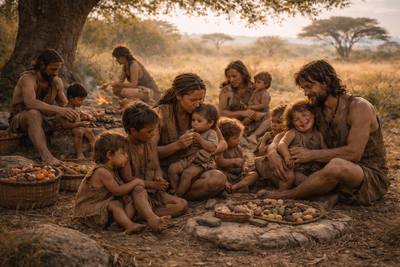
feb 04 ⎯ Non tradottoAuthor’s Note: This essay arose from a long-standing discomfort with the term “primitive”. It is a term that says more about the observer than the observed. My first encounter with Marshall Sahlins’ Stone Age Economics gave that discomfort intellectual grounding. Shortly after, time spent among the Mentawai people of Siberut gave it flesh, laughter, and memory. What follows is not nostalgia, nor a call to abandon modern life, but an attempt to think more honestly about what we mean by progress, wealth, and civilization. “The world’s most primitive people have few possessions, but they are not poor. Poverty is not a certain small amount of goods, nor is it just a relation of inequality. Poverty is a social status. As such, it is the invention of civilization.” - Marshall Sahlins, Stone Age Economics Rethinking the Primitive When Stone Age Economics was published in 1972, it quietly overturned one of the most deeply held assumptions of modern life: that material accumulation is the natural measure of wealth. Marshall Sahlins did not merely analyze hunter-gatherer societies; he exposed a cultural illusion at the heart of industrial civilization. His most provocative claim was simple and unsettling. So-called “primitive” societies were not poor. They were, in fact, the original affluent societies. Affluence, Sahlins argued, is not a function of production. It is a relationship between desire and sufficiency. By that measure, many hunter-gatherers lived richer lives than we do now: working fewer hours, meeting their needs reliably, and devoting far more time to social life, ritual, and rest. The shock of Sahlins’ work is not historical. It is contemporary. It forces us to ask whether modern scarcity is real or whether we manufacture it and then mistake it for fate. The Original Affluent Society In the now-famous chapter “The Original Affluent Society,” Sahlins dismantles the image of early humans as locked in a desperate struggle for survival. Drawing on ethnographic data, he showed that many foraging societies spent only a few hours a day securing food. Hunger was not constant. Leisure was not rare. They achieved affluence not by producing more, but by wanting less. This reverses the logic of modern economies. Industrial societies define success through endless expansion, endless innovation, and endless desire. Scarcity becomes permanent because desire has no natural stopping point. In contrast, hunter-gatherer societies lived within an ecology of limits that were understood, respected, and socially reinforced. From the vantage point of a world plagued by burnout, ecological collapse, and chronic dissatisfaction, Sahlins’ argument reads more like a diagnosis than an anthropological argument. Economy Is Not Neutral One of Sahlins’ most enduring contributions was his insistence that economy is not a universal, rational system. It is cultural. In many small-scale societies, economic life is inseparable from kinship, ritual, and moral obligation. Exchange is embedded in relationships. Value is social before it is material. The gift, not the contract, forms the basis of cohesion. This directly challenges the modern economic model of the rational, utility-maximizing individual. In enough societies, people act not to maximize profit, but to maintain balance, honor obligations, and affirm belonging. Generosity raises status. Hoarding invites suspicion. From this perspective, modern economic behavior appears less rational than we assume. Despite unprecedented productivity, inequality grows. Despite rising GDP, well-being stagnates. The models fail because they misunderstand what motivates human beings. The Spirit of the Gift In his discussion of reciprocity, Sahlins describes gift economies not as primitive precursors to markets, but as fundamentally different moral systems. Gifts create bonds. They bind people into ongoing relationships of mutual recognition and responsibility. The value of a gift lies not in equivalence, but in meaning. This idea feels oddly contemporary. Mutual aid networks, open-source communities, and informal care economies continue to thrive alongside markets, not because they are inefficient, but because they meet human needs that markets cannot. They generate trust, belonging, and dignity. In a world increasingly mediated by algorithms and impersonal transactions, the persistence of gift-based exchange is a quiet reminder that economy is always, at its core, social. Lessons From Siberut These ideas are not abstract to me. During my time on Siberut, in the Mentawai Islands, I was struck by something that fascinated me. Men and women spent hours sitting on verandas, talking. Not waiting. Not killing time. Simply being together. Members of other clans would arrive unannounced and stay for hours. Laughter was constant, erupting so frequently it became contagious. This was not ceremony. It turned out, as I realized after some time, to be routine. What stood out most was presence. When people listened, they were fully there. Fully engaged. Words did not drift past them. They landed. They were absorbed. An anthropologist named Gigi, who helped me enter this world, once told me a story that crystallized everything Sahlins had tried to explain. On Siberut, all men were competent in subsistence skills, but some excelled in some skills. Some were exceptional hunters. Others were gifted carvers. You must know that pigs were highly valued and frequently exchanged. One day, Gigi asked a talented carver named Si-Ta-maila why he did not spend most of his time carving dugout canoes and exchanging them for pigs. After all, pigs were the closest thing the island had to a store of value. Si-Ta-maila did not understand the question. Why would he make more dugouts than he needed? He only needed one. When Gigi explained that this strategy could make him the wealthiest man in the clan, Si-Ta-maila burst into laughter, laughing until tears streamed down his face. The idea was so absurd that it barely deserved a response. The question itself was the joke. Civilization and the Invention of Poverty The Mentawai Islands have since been pulled into the 21st century, reluctantly and violently. Inland populations were resettled by the Indonesian government into coastal nuclear-family housing. It didn’t take long for clans, who understood themselves as collective entities rather than individuals, to return to their ancestral villages. In response, the military burned those villages after moving the people out. Large timber companies were granted licenses, accelerating the collapse of Mentawai society. Within a short period, unfamiliar concepts became commonplace: unemployment, alcoholism, prostitution, depression. Scarcity arrived not as a natural condition but as a social, constructed one. The Mentawai were animists. When a large hardwood tree was cut down to make a dugout, the act was preceded by an elaborate ceremony in which a sapling was brought to the doomed tree, giving its spirit a new dwelling. Against this worldview, the wholesale destruction of the forest was not merely an economic loss. It was spiritual devastation. This is what Sahlins meant when he said poverty is an invention of civilization. Not because suffering did not exist before modernity, but because modern systems institutionalize lack by severing people from sufficiency, autonomy, and belonging. Sahlins does not ask us to abandon modern life or return to the forest. He asks something more uncomfortable: to question the assumptions we no longer notice. What if affluence meant enough rather than more? What if work served life instead of consuming it? What if the economy were a tool for relationship rather than extraction? So-called “primitive” societies are often imagined as rigid, hierarchical, or authoritarian. The Mentawai villages were none of these. They had no chiefs. Authority did not concentrate in human hands. They had shamans, but their influence extended only into the spiritual realm, not into governance or coercion. This distinction matters. It reminds us that complexity does not require domination, that order does not demand hierarchy, and that coherence can exist without centralized power. Learning from such societies does not entail regression. Most of them no longer exist in any intact form. They were dismantled before we recognized their coherence, before we understood their value. Not because they failed, but because they obstructed. What remains is not a way of life to return to, but a set of human capacities we have not entirely lost: the ability to recognize sufficiency, to place relationship above accumulation, and to understand that presence itself can be a form of wealth.
-
Two Worlds Colliding · Part 5 · Protection and Its Price
feb 03 ⎯ Non tradottoAuthor’s Note: This episode turns on an old confusion: protection offered as generosity, and generosity framed as obligation. By now, land is no longer a revelation. The ships have already touched shore, already taken in water, already learned the basic grammar of these islands. What changes here is not geography, but consequence. Sugbo is the first place that answers back with power. What looks like peace begins to acquire a price. THE SEA HAD LOST ITS NOVELTY. They had already stepped onto island sand, already tasted fresh water that did not come from barrels, already watched ritual and curiosity play themselves out on smaller shores. The crossing was no longer the story. What remained was direction. Now the water carried different signs. Birds flew with confidence rather than hunger. Debris drifted not as an accident but as a message. Boats appeared not to observe, but to measure. This was not land waiting to be found. It was land that already knew itself. On the foreign ships, the mood had improved dramatically. Men spoke less of survival and more of position. Magellan appeared on deck before the bell, arms folded, gaze fixed ahead, not with the relief of a man nearing safety, but with the focus of someone approaching an accounting. “You smell it,” he said once, not turning. Enrique rested a hand on the rail. “I smell many things.” “Power,” Magellan said. “Yes,” Enrique replied, after a moment. The first small boats did not rush them. They held distance, circling with ease, paddles cutting the water cleanly. The men aboard carried spears without display. This was not fear. It was confidence. Enrique spoke first. He chose words shaped by markets rather than commands. He said they were travelers. He said they sought trade and water. He said their leader wished to speak with those who held authority here. The island men listened without surprise. They asked questions that did not assume submission. Who were these men. Where had they already been. What did they offer besides need. Enrique answered carefully. He gestured ahead, toward a larger island where smoke rose steadily and boats crowded the shore. Sugbo. The name carried weight. It was not whispered like a rumor. It was spoken like a fact. When he translated the invitation, Magellan heard confirmation. A rajah. A court. A hierarchy that could be entered, perhaps corrected. “We will go,” Magellan said. On Sugbo, preparation had already begun. Humabon rose early and walked the edge of the water while the town woke behind him. Boats moved constantly. Traders shouted. Smoke rose thick with roasted meat. Sugbo was not a place surprised by strangers. It was a place that specialized in receiving them. He liked that sound. Power, he knew, announced itself through ease. His advisers gathered quickly. They spoke of iron, of thunder weapons, of babaylan. Of men who arrived with stories about gods and kings. “And what do they want,” Humabon asked. “Food. Water. Trade,” one adviser said. “And recognition.” Humabon smiled faintly. “Then they want what all men want.” He ordered gifts prepared. Gold ornaments. Fine cloth. Food in deliberate excess. He ordered the beach arranged to suggest readiness rather than defense. Spears upright, not raised. Drums slow, measured. Welcome, when staged correctly, could obligate without appearing to demand. When the foreigners came ashore, Humabon stepped forward first. Palms open. Posture relaxed. He watched Magellan, the Captain-General, step onto the sand as if already assessing its value. Enrique made the introductions. Magellan spoke at length. He spoke of friendship. Of protection. Of a god who watched those who aligned themselves properly. His certainty arrived polished, practiced. Humabon listened with interest. Protection, he knew, always arrived framed as generosity. And generosity, once accepted publicly, became debt. He replied with warmth. He spoke of unity among islands. Of peace. Of mutual benefit. He invited the foreigners to his hall. The feast that followed was lavish enough to make restraint look rude. Humabon laughed easily. He offered food with his own hands. He watched the foreigners’ eyes linger on gold, on woven cloth, on women who did not avert their gaze. He also watched their babaylan, their priest. The man held a small cross as if it were both shield and blade. He spoke often to the Captain-General, quietly, insistently. Humabon leaned toward one of his advisers. “What does that one want.” “My lord,” the adviser said, “your obedience.” Humabon’s smile did not change. “Then he wants what they all want.” Across the channel, on Mangatang, word arrived without ceremony. A fisherman spoke of ships that moved like floating houses. Of Sugbo dressed as a celebration. Of Humabon smiling like a man who believed the sea favored him. Lapu-Lapu listened in silence. He stood near the mangroves where roots gripped the earth and watched the channel shift with the tide. Narrow enough to cross. Wide enough to pretend separation. “They will send for you,” Mayumi said. “Yes,” he replied. “And some will say you should go,” she added. “They will call it wisdom.” “Wisdom without spine is surrender,” Lapu-Lapu said. That evening, the message came. A boat approached but did not land. The messenger called across the water, his voice trained for public memory. Rajah Humabon invites you to Sugbo. To meet the Captain-General. To secure peace. Lapu-Lapu stepped to the shoreline. “Tell Humabon,” he said, “that peace does not require a journey.” The boat lingered, then turned back. On Sugbo, the refusal was received politely. “He asserts himself,” Humabon said. “He defies you,” Magellan replied. “Defiance can be useful,” Humabon said. “If managed.” Magellan spoke of complications. Of matters that required resolution. He spoke of action. Humabon nodded, already calculating how much pressure could be applied before resistance hardened beyond use. “Let us offer grace first,” Humabon said. “Publicly.” Grace was another word men used for leverage. The next invitation was larger. Louder. Cloth bearing Sugbo’s symbols. A cross raised high. The message carried across the water with practiced clarity. No submission. No tribute. Only words. Neutral ground, everyone knew, was a story told by those who already controlled the terms. Lapu-Lapu answered from the shore. “I do not meet strangers who arrive with soldiers and babaylan and call it neutrality.” That night, a trading hut on Mangatang burned. Not fully. Just enough. Smoke rose into the dark. Ash drifted across the village. The fire was precise, deliberate. The owner stood shaking, face streaked with soot. “They told me to light it,” he said. “They said it would show I understood.” “And what do you think,” Lapu-Lapu asked. “They will not stop,” the man whispered. “No,” Lapu-Lapu said. “They will not.” By morning, uncertainty had thinned into anger. Lapu-Lapu stood before the gathered village. “They offer protection,” he said. “But protection that demands obedience is only another kind of threat.” Faces hardened. “We will not cross the channel,” he continued. “We will not strike first. But we will no longer pretend this is only talk.” The babaylan stepped forward, voice calm, carrying. “The tide has turned,” she said. “Those who stand together will stand longer.” Across the channel, watch fires appeared along Mangatang’s shore, spaced deliberately. “They are preparing,” Magellan said. “Yes,” Enrique replied. “Then so will we.” Enrique looked at the water between the islands. At how narrow it seemed now. How quickly welcome had turned into accounting. On Mangatang, Lapu-Lapu walked the shoreline alone before dawn, listening to the water lap against the roots, feeling the pull beneath his feet. The price of welcome had been named. No one had yet agreed to pay it. To be continued… _______________________________________________________ Terms & Names Terms Barangay – A coastal settlement or community, often composed of extended kin groups. Datu – A local chieftain whose authority rests on lineage, alliances, reputation, and force. Babaylan – A ritual specialist, healer, and spiritual authority, often serving as intermediary between the human and spirit worlds. Balangay – A large wooden boat used for trade, travel, and warfare across island waters. Alipin – A dependent or bonded person; status could vary widely and was not equivalent to later colonial chattel slavery. Sandugo – A blood compact sealing alliances or agreements between leaders. Mangayaw – A raid or expedition, often undertaken for prestige, vengeance, or captives. Anito – Spirits or ancestral beings believed to influence the living world. Names & Places Lapu-Lapu – Datu of Mangatang, a coastal leader whose authority rests on independence and control of the reefs. Mangatang – The island later known as Mactan; a strategic settlement opposite Sugbo. Sugbo – A powerful neighboring settlement, later known as Cebu. Zula – A rival datu claiming influence along Mangatang’s western shore. Hara – A woman close to Lapu-Lapu, offering counsel, grounding, and presence rather than prophecy. Kumpar – An older warrior in Lapu-Lapu’s following, marked by experience and a direct view of power and violence. Banog – A younger warrior, observant and efficient, often tasked with watching rather than speaking. Bohol (Bool) – An island to the east, known in pre-colonial times as Bool. Leyte (Tandaya) – An island to the northeast, historically referred to as Tandaya. Olango Island – an island 5km off the east coast of Mangatang.
-
Two Worlds Colliding · Part 3 · What Alliance Means
gen 30 ⎯ Non tradottoAuthor’s Notes: This episode clarifies the grammar of Sugbo. Alliance here is not sentiment, nor oath. It is calibration. Trade precedes trust. Hospitality precedes obligation. Nothing is given without being counted, and nothing is refused outright if delay can do the work instead. What looks generous is precise. What looks open is bounded. Sugbo did not rush. Rush belonged to those who needed answers quickly. Sugbo had survived by learning when not to ask for them. The harbor functioned as a membrane rather than a gate, allowing movement without surrendering control. Canoes came and went, trade flowed, and information was absorbed without being acknowledged. The arrival of foreign ships did not interrupt this rhythm. It was incorporated into it. This was how Sugbo evaluated risk. Not by confrontation, but by exposure. Let strangers remain visible long enough, and they would reveal what they needed, what they feared, and how long they could wait. The ships lay at anchor and the harbor breathed around them, canoes passing in steady rhythms, smoke rising and thinning with the tide. News moved faster than boats. By the time Magellan prepared his formal approach, Sugbo had already weighed him. Humabon received that knowledge without urgency. He had ruled long enough to know that speed belonged to those with less to lose. The foreigners were large, armed, and distant from their supply. Their strength announced itself loudly. Their dependence did not. When the first meeting was arranged, it unfolded as if it had always been meant to. Mats were laid. Shade was provided. Water appeared without being asked for. The gestures were careful and complete. Magellan read them as welcome. He entered with composure, armor left behind, posture upright. He brought words shaped for recognition. Titles. Explanations. The logic of distant kings translated into local courtesy. Enrique stood slightly behind and to the side, where he could hear without appearing to listen. He watched faces more than mouths. He noted where eyes lingered and where they moved away. He translated faithfully, smoothing where the weight of one language would otherwise crush another. Humabon listened without interruption. Listening, for Humabon, was never passive. He listened to hear what was being offered, and more importantly, what was being assumed. The foreign commander spoke as if an alliance were a natural progression, a sequence that began with courtesy and ended with obligation. Humabon understood alliance differently. Alliance was not declared. It was grown, tested through imbalance, and abandoned without ceremony if it ceased to serve. He let Magellan speak at length because length itself was information. Men who spoke this much believed words carried authority. Sugbo’s authority rested elsewhere. When Magellan spoke of friendship, Humabon nodded once. When Magellan spoke of alliance, Humabon asked about trade. Not directly. Not immediately. He asked instead about ships, routes, and intentions. He asked what the foreigners carried and what they lacked. Magellan answered readily. Openness, he believed, created symmetry. Humabon smiled. Trade followed conversation as naturally as night followed day. Goods were shown. Prices were not named. Value moved between hands in glances and pauses. The harbor itself seemed to lean in, attentive. Trade was Sugbo’s true language. It preceded diplomacy and outlasted it. Goods were not merely exchanged but observed, their routes traced backward in the mind. What mattered was not what the foreigners offered, but what they required in return. Ships needed water. Crews needed food. Iron and glass had novelty, but novelty did not sustain harbors. Every exchange tightened the net slightly. Nothing closed. Nothing snapped. The foreigners were allowed to feel momentum without being allowed leverage. Hospitality deepened. Food appeared. Not abundance, but enough. Music followed. Not celebration, but atmosphere. The foreigners were kept comfortable without being allowed to forget they were being hosted. Magellan mistook this for progress. Enrique did not. He felt the shape of the imbalance even as he participated in it. Translation placed him inside the mechanism, not above it. Each sentence he rendered made the exchange smoother while also removing friction that might have slowed misunderstanding. He knew enough to recognize that hospitality here was not generosity. It was containment. He wondered briefly whether to intervene, to clarify that delay did not mean assent, that welcome did not imply allegiance. But intervention would require authority he did not possess. He remained where he was, a hinge rather than a hand. He saw how every offering carried a condition that did not need to be spoken. He saw how refusal never appeared as refusal. It arrived as a delay, as a redirection, as a suggestion of a better moment later. Humabon never said no. He said, “We will see.” When the subject of protection arose, Humabon listened carefully. He did not ask for it. He allowed Magellan to offer. The words settled into the space between them and stayed there, undefined. Protection implied obligation. Obligation implied hierarchy. Humabon accepted neither openly. Instead, he widened the circle. Other figures entered the conversation. Traders. Advisers. The babaylan, present but not foregrounded, listening more than speaking. The network revealed itself gradually, like a net drawn just tight enough to be felt. Magellan sensed momentum and pressed. “We stand with those who stand with us,” he said, meaning it as reassurance. Humabon received it as information. Enrique felt the imbalance sharpen. Alliance here was not alignment of banners. It was permission to pass, to buy, to stay without friction. Anything more would require time, leverage, and proof. The afternoon lengthened. The tide shifted. Still, nothing was concluded. Hospitality intensified instead. Magellan was invited to stay. To rest. To eat again. The harbor remained open. Canoes continued to pass. Life did not rearrange itself around the foreigners. That was the point. Hospitality in Sugbo was never excess. It was calibration made visible. Food appeared in measured portions, sufficient to remove hunger without granting satisfaction. Shade was offered where the sun cut hardest, then withdrawn as the day shifted. Comfort was provided just long enough to establish dependence, never long enough to erase awareness of it. The foreigners were not being honored. They were being held. Every courtesy created a subtle ledger entry, not of debt, but of position. Sugbo did not trap its guests. It surrounded them gently, with rhythm and repetition, until movement itself required permission. Magellan mistook this for respect because in his world, respect flowed upward. Here, it flowed inward. To be hosted was to be placed inside another man’s design. Enrique felt the geometry tighten with each passing hour. The harbor did not close, but it narrowed. Information moved freely, but decisions did not. The foreigners were allowed to see everything except the boundaries that mattered. That was the elegance of it. Nothing was denied. Nothing was conceded. Hospitality absorbed pressure without yielding ground, turning presence into exposure. When Magellan spoke later of openness and goodwill, he did not realize that Sugbo had already defined the terms. He was welcome. He was observed. He was contained. And because no hand had closed around him, he did not yet understand that he had been grasped. When the meeting ended, it did so without closure. Promises were not broken because none had been made. Understanding existed only where both sides needed it to. As Magellan returned to his ship, he felt satisfaction. He had not been refused. He had not been challenged. Sugbo, in his reading, was receptive. Enrique watched the shoreline recede and understood what had been exchanged. Hospitality had been granted. Power had not. Hospitality would continue. Alliance would wait. That was how Sugbo ruled. To be continued… _________________________________________________________ Terms & Names Terms Barangay – A coastal settlement or community, often composed of extended kin groups. Datu – A local chieftain whose authority rests on lineage, alliances, reputation, and force. Babaylan – A ritual specialist, healer, and spiritual authority, often serving as intermediary between the human and spirit worlds. Balangay – A large wooden boat used for trade, travel, and warfare across island waters. Alipin – A dependent or bonded person; status could vary widely and was not equivalent to later colonial chattel slavery. Sandugo – A blood compact sealing alliances or agreements between leaders. Mangayaw – A raid or expedition, often undertaken for prestige, vengeance, or captives. Anito – Spirits or ancestral beings believed to influence the living world. Names & Places Lapu-Lapu – Datu of Mangatang, a coastal leader whose authority rests on independence and control of the reefs. Mangatang – The island later known as Mactan; a strategic settlement opposite Sugbo. Sugbo – A powerful neighboring settlement, later known as Cebu. Zula – A rival datu claiming influence along Mangatang’s western shore. Hara – A woman close to Lapu-Lapu, offering counsel, grounding, and presence rather than prophecy. Kumpar – An older warrior in Lapu-Lapu’s following, marked by experience and a direct view of power and violence. Banog – A younger warrior, observant and efficient, often tasked with watching rather than speaking. Bohol (Bool) – An island to the east, known in pre-colonial times as Bool. Leyte (Tandaya) – An island to the northeast, historically referred to as Tandaya. Olango Island – an island 5km off the east coast of Mangatang.
-
Two Worlds Colliding · Part 2 · Strangers Who Carry Thunder
gen 27 ⎯ Non tradottoAuthor’s Notes: This episode shifts the lens away from the island and toward the men approaching it. The fleet does not arrive violently. It arrives confidently. Meaning, in their minds, is portable. It can be carried across water, translated, and applied. The misunderstanding that closes this episode is not dramatic, and that is its danger. Nothing breaks. Nothing is refused. Something simply fails to align. The ships passed Mangatang without slowing. From the deck, the island appeared close enough to touch, a low dark shape resting on the water as if it had chosen that position deliberately. The reef showed itself in pale seams beneath the surface, then vanished again as the tide shifted. There were no fires. No boats pushed out to meet them. Nothing announced welcome or resistance. Magellan studied the shoreline briefly, then turned his attention forward. Mangatang was not his destination. Sugbo was. Position mattered. Harbors mattered. Men who controlled trade mattered more than men who controlled reefs. An island that did not announce itself could be dealt with later, once the proper relationships had been established. Behind him, the fleet creaked and adjusted, sails drawing, hulls responding to familiar commands. The men had settled into the quiet competence of sailors who believed the most dangerous part of their journey was already behind them. Enrique stood near the rail, eyes on Mangatang as it slid past. He said nothing. Islands like that had a way of remembering being ignored. From the deck, Mangatang revealed nothing further. No canoes slipped into the water. No figures moved along the shore in ways that could be read as a signal or a welcome. The island seemed to accept being passed without comment, and that silence unsettled some of the men more than open hostility would have. A shore that did not react forced you to supply your own meaning, and meaning, when supplied too quickly, had a way of hardening into error. Magellan did not linger on the thought. He had learned long ago that attention was a finite resource. To spend it on every uncertainty was to arrive nowhere. Mangatang was close, yes, but closeness alone did not confer relevance. Power announced itself through trade routes, harbors, and men willing to speak their names aloud. An island that waited would continue to wait until summoned. As the ships angled toward the wider opening of Sugbo harbor, movement appeared on the water ahead. Small boats. Fishing craft. Light, narrow, built for shallow water and daily return. Men stood in them easily, paddles resting against their shoulders, nets coiled at their feet. They did not flee at the sight of the ships. They slowed, watching. Magellan lifted a hand slightly. The signal passed. The ships eased their approach. “This is better,” he said. “They trade.” The fishermen came closer, curiosity outweighing caution. Faces were open, eyes alert. One of them called out, a sentence shaped by the water and distance. The words did not carry clearly. Enrique listened. He caught fragments, familiar sounds arranged in a way that made sense only if you already belonged to the coast. “They ask where we come from,” he said. Magellan nodded. “Tell them.” Enrique spoke back, choosing his words carefully, simplifying, unaware he was already shaping the exchange toward misunderstanding. “We come from far away,” he said. “We travel to trade. We seek the lord of this place.” The fishermen exchanged glances. One of them laughed briefly, not in mockery but in surprise. Another spoke again. “They say Sugbo belongs to Humabon,” Enrique translated. “They say he receives visitors.” Good, Magellan thought. A known authority. A name. That was how order revealed itself. He gestured, and small objects were brought forward. Not gifts, not yet, but items meant to signal intent. Glass that caught the light. Metal that held it. The fishermen accepted them cautiously, turning them in their hands, testing weight and edge. One of the fishermen ran a thumb along the rim of a metal cup, then tapped it lightly against the side of his boat. The sound was dull, unimpressive. He glanced at his companions and shrugged, as if to say the object had uses but no voice. They had seen strange things before. Traders passed through Sugbo often enough, each carrying objects meant to impress, persuade, or confuse. What mattered was not novelty, but what followed it. Enrique noticed how quickly the fishermen’s attention returned to the ships themselves. The hulls. The rigging. The number of men standing idle. They were counting without appearing to, gathering information as coastal people always did. He wondered what conclusions they were already drawing and whether any of them aligned with the assumptions that were forming so confidently behind him. They did not bow. They did not thank. They nodded, once. Magellan took this as composure. The boats lingered alongside for a time, conversation moving in short exchanges, meaning approximated rather than shared. Directions were given with hands and glances. The fishermen pointed toward the inner harbor, then traced a line with their paddles, careful, precise. “There is shallow water,” Enrique said. “They warn us.” “We will manage,” Magellan replied. The fishermen pushed off eventually, returning to their work with frequent backward looks. The ships continued on, guided now by local knowledge filtered through assumption. As Sugbo opened before them, the harbor revealed itself in layers. Canoes. Smoke. The suggestion of a settlement larger than any they had seen since leaving the islands farther east. The water deepened. The shore grew more articulate, shaped by use and habitation. Magellan felt the familiar comfort of focus. This was the moment where journeys became encounters. He ordered the ships to slow and prepare. Men moved with practiced ease. Lines were checked. Colors readied. Not for battle. For display. An order was something one demonstrated before negotiating. On Mangatang, watchers followed the fleet’s movement with narrowed eyes. They did not speak of it as a decision. The ships had chosen their path. The island had not been addressed. That in itself was information. Lapu-Lapu listened as reports came in, brief and factual. Ships passing. Fishermen spoken to. No landing. “They look past us,” Kumpar said. “For now,” Lapu-Lapu replied. Mayumi watched the harbor in the distance, smoke rising faintly against the sky. “They will learn where they are,” she said. “Yes,” Lapu-Lapu agreed. “But not yet how.” In Sugbo, the ships anchored. Word traveled quickly, faster than any boat. A fleet. Foreign. Large. Armed. Not hostile, not yet. Curious. Humabon received the news with interest carefully arranged into concern. By the time the first formal approach was made, he was ready. Magellan prepared his men for contact. “This is where order begins,” he told his officers. “We show ourselves clearly. We speak plainly. We do not rush.” They believed him. The boats that went ashore carried faces meant to reassure. No drawn weapons. No raised voices. A priest among them, symbols visible but restrained. Enrique stepped onto the shore and felt the difference immediately. This was not Mangatang’s quiet watchfulness. This was calculation. Eyes measured. Words weighed. Gestures catalogued. Humabon appeared with practiced ease, neither hurried nor aloof. He spoke through intermediaries at first, then directly to Enrique, voice smooth, cadence deliberate. “You come from far away,” he said. “You arrive with many ships.” Magellan inclined his head. “We come as friends.” The word friend landed softly and stayed there, undefined. Humabon smiled. Names were exchanged. Titles offered and received. Explanations followed, careful, selective. Each side believed they were being understood. At one point, Magellan spoke at length about his king, about order, about allegiance shaped by recognition. Enrique translated, smoothing edges, shortening what felt too heavy. Humabon listened without interruption. When he replied, his words were courteous, welcoming, precise. “You are guests,” he said. “Sugbo receives guests.” Magellan heard acceptance. Enrique heard hospitality. Humabon meant something narrower. No one corrected the difference. Later, as arrangements were discussed, Magellan gestured toward the channel, toward Mangatang’s low silhouette still visible beyond the harbor. “That island,” he said. “It lies close.” Humabon followed his gaze. His expression did not change. “Yes,” he said. “It lies there.” The conversation moved on. In that moment, something essential slid out of alignment. Not because of deceit. Not because of a threat. But because each man believed the other shared his understanding of what had already been said. Outside, the water moved in and out of the harbor, indifferent. Mangatang remained where it was. Unaddressed. Unclaimed. Unconsulted. The misunderstanding did not announce itself. It simply took its place. ________________________________________________________ They did not arrive as conquerors. They arrived with confidence, with maps already drawn, with names prepared in advance. What they did not arrive with was an understanding of silence, or of what it means when a shore does not answer back. To be continued …….
-
Dante Alighieri: Il Poeta Che Attraversò l’Inferno per Trovare il Paradiso
gen 26Jaap Verbeke Nota dell’Autore: Pochi scrittori hanno esplorato la condizione umana con la profondità e la chiarezza di Dante Alighieri. Esiliato dalla sua patria e tormentato dalla morte della donna che amava, trasformò la sua sofferenza in una delle opere più durature mai scritte. La Divina Commedia non è solo un viaggio nell’aldilà; è un viaggio nell’anima, attraverso la perdita, l’orgoglio, la speranza e la lenta riscoperta della grazia. “La ferita è il luogo da cui entra la luce in te.” - Rumi Una Vita Segnata dall’Esilio e dalla Visione Dante Alighieri nacque a Firenze intorno al 1265, una città divisa dal potere, dalla fede e dall’ambizione. I fiorentini erano feroci in politica e fieri nell'arte, e il giovane poeta assorbì entrambe le cose. Studiò filosofia, teologia e letteratura classica e divenne parte del dolce stil novo, che trattava l'amore come un ponte tra l'umano e il divino. Ma la vita di Dante fu turbolenta quanto l’epoca in cui visse. Coinvolto nella faida politica tra Guelfi e Ghibellini, fu infine bandito da Firenze. Non sarebbe mai tornato. L'esilio lo spogliò del suo status, della sua casa e dell’appartenenza, eppure gli diede anche ciò che il conforto non avrebbe mai potuto: la visione. La Perdita di Beatrice: Il Dolore Come Illuminazione Nel cuore della poesia di Dante c’era Beatrice Portinari, la donna che divenne la sua musa per tutta la vita. I loro incontri furono pochi, le loro parole scarne, ma la sua presenza riempì la sua immaginazione. Quando morì nel 1290, il mondo di Dante crollò. Eppure, dalle ceneri del dolore sorse qualcosa di luminoso. In La Vita Nuova, iniziò a tradurre il suo dolore in rivelazione. Beatrice smise di essere solo una donna; divenne l'incarnazione della grazia divina, una figura di luce che lo guidava verso la comprensione. Attraverso di lei, Dante imparò che l'amore, quando spogliato dal possesso e dall'ego, poteva diventare un percorso verso la redenzione. Il dolore, per Dante, non era la fine dell'amore ma la sua purificazione. Perdendo Beatrice, trovò il significato del desiderio stesso, quella fitta profonda che, quando affrontata onestamente, diventa una forma di preghiera. La Divina Commedia: Il Viaggio Interiore Durante i suoi lunghi anni di esilio, Dante iniziò il suo capolavoro: La Divina Commedia. Racconta la storia di un’anima persa nell'oscurità che scende all'Inferno, sale la montagna del Purgatorio e infine raggiunge la luce del Paradiso. Guidato prima dal poeta romano Virgilio e poi da Beatrice, l'alter ego di Dante attraversa ogni condizione umana, dalla disperazione al risveglio. Ma La Divina Commedia è più di una mappa dell’aldilà; è un ritratto della coscienza. L'Inferno rivela cosa succede quando l'amore viene corrotto, quando l'orgoglio, l'avidità e la crudeltà consumano il cuore. Il Purgatorio insegna l'umiltà e il rinnovamento. Il Paradiso rivela cosa significa vedere attraverso gli occhi della grazia. In queste pagine, Dante ha creato uno specchio dell'umanità. Ogni peccato e virtù che ha descritto respira ancora in noi. Ogni anima che incontra è un riflesso della nostra storia incompiuta. Per questo il suo poema, sette secoli dopo, è ancora percepito come intimo. Il Poeta Che Forgiò una Lingua Prima di Dante, l’Italia era un mosaico di dialetti. Il latino era la lingua degli studiosi; il volgare era considerato indegno di pensiero serio. Dante cambiò per sempre questa situazione. Scrisse il suo capolavoro in toscano – la lingua del popolo – ed elevò così il linguaggio quotidiano ad arte. Questa scelta ha ridefinito la storia. Il toscano avrebbe in seguito formato la base dell'italiano moderno, e Dante sarebbe stato chiamato il Sommo Poeta. Attraverso di lui, una terra divisa trovò una voce comune. Inventò anche la terza rima, una rima concatenata che lega ogni terzina alla successiva, riflettendo come ogni atto umano conduca inesorabilmente a un altro. La sua struttura stessa divenne filosofia, rendendo forma e significato inseparabili. Eredità e Illuminazione Ciò che rende eterna l'opera di Dante non è la sua teologia, ma la sua umanità. Aveva capito che la sofferenza affina l'anima, che l'amore, quando liberato dall'egoismo, redime, e che il linguaggio può illuminare ciò che si trova oltre la ragione. La Divina Commedia ci ricorda che ogni vita è un pellegrinaggio. Ognuno di noi, a modo suo, cammina attraverso inferni di perdita, purgatori di apprendimento e fugaci scorci di paradiso. Il viaggio è interiore, la destinazione è la luce. La vita di Dante fu segnata dall'esilio e dal crepacuore, eppure trasformò entrambi in rivelazione. Il suo genio risiede non solo in ciò che scrisse, ma in ciò che divenne, la prova che l'arte, nata dal dolore, può trasformare la disperazione in bellezza. Per la Tua Riflessione • Quale tuo “esilio” personale ha plasmato il modo in cui vedi il mondo? • Come può l'amore – anche quando perduto – diventare un maestro? • In quali modi l'arte o la riflessione possono redimere la sofferenza? • Cosa significherebbe attraversare la tua oscurità e trovare la luce dall'altra parte?
-
James Brooke: The Adventurer Who Became the White Rajah of Sarawak
gen 26 ⎯ Non tradottoAuthor’s Note: “A man may shape his own destiny, but he must first have the courage to set sail.” - Anonymous In the early decades of the nineteenth century, when the British Empire’s reach stretched across oceans and the map of Southeast Asia was still a patchwork of sultanates, tribal territories, and pirate-haunted seas, one man carved out a kingdom of his own. James Brooke, an Englishman born in colonial India, was neither a career soldier nor a conventional statesman. Yet through a mix of daring, diplomacy, and sheer persistence, he became the first White Rajah of Sarawak, a ruler in a land far from his birthplace, governing a people whose language and customs he had to learn from the ground up. His story is not merely one of conquest, but of transformation: a restless young man, shaped by injury and disappointment, who found purpose in the unlikeliest of places. Early Life in a Changing World James Brooke was born on 29 April 1803 in Secrore, near Benares (now Varanasi), India, during the height of the British East India Company’s influence in the subcontinent. His father, Thomas Brooke, was an English judge in the Company’s service, and his mother, Anna Maria, the daughter of a Scottish nobleman. Brooke’s early years were shaped by the sights, sounds, and contradictions of colonial India, a world where British authority coexisted uneasily with ancient traditions. At twelve, he was sent to England for schooling. The transition from India’s vibrant landscapes to the grey restraint of England was jarring. He attended Norwich School and later the Royal Military College at Sandhurst, but illness and injury interrupted his studies. Even as a boy, he was restless, drawn to adventure and the romance of far-off places. Soldiering and Setbacks In 1819, at just sixteen, Brooke joined the Bengal Army of the East India Company. His early military career took him into the First Anglo-Burmese War (1824–1825), a brutal campaign fought in the jungles of Southeast Asia. There, he was severely wounded, an injury that ended his active service. Returning to England to recover, Brooke found himself adrift. He had tasted the thrill of distant lands but was now confined to a quieter life. Yet the pull of the East never left him. He read widely about exploration and trade, dreaming of returning, not as a soldier, but as an independent adventurer. The Call of the Archipelago In 1834, Brooke attempted a trading voyage to the Eastern Archipelago, but it ended in disappointment. Undeterred, he invested his inheritance in a schooner, The Royalist, and in 1838 set sail again, this time with a crew and a clearer purpose. Arriving in Singapore, he learned that Pengiran Muda Hassim, the chief minister of Brunei, was struggling to suppress a rebellion in Sarawak, a territory on the northwest coast of Borneo. Sarawak was nominally under Brunei’s control but plagued by unrest among the local Dayak and Malay populations. Brooke offered his assistance, bringing his ship, his men, and his sense of destiny. The Making of a Rajah Brooke’s intervention proved decisive. By 1841, the rebellion had been crushed, and in gratitude, Muda Hassim offered him the governorship of Sarawak. The following year, the Sultan of Brunei formally confirmed Brooke’s position, granting him the title of Rajah. Thus began the Brooke Raj, a singular political experiment in which a British adventurer ruled an Asian state as an independent monarch. As Rajah, Brooke sought to impose order. He worked to suppress piracy, which plagued the surrounding seas, and to curb headhunting among the Dayak tribes. His rule blended British administrative methods with a respect for local customs, earning him both admiration and suspicion. Power, Challenges, and Legacy Brooke’s reign was not without controversy. His anti-piracy campaigns drew criticism in Britain, where he was accused of using excessive force. He was investigated in Singapore but ultimately cleared of wrongdoing. Despite these challenges, he maintained his authority and expanded Sarawak’s territory. He also faced internal threats, uprisings and political intrigue in Brunei, yet through diplomacy, military resolve, and personal charisma, he held his ground. By the time he returned to England in 1863, leaving his nephew Charles to govern, Sarawak had evolved from a troubled outpost into a stable, internationally recognized state. He died in Devon in 1868, leaving behind a dynasty that would endure for a century. Reflective Commentary James Brooke’s story is one of ambition, resilience, and the uneasy meeting point between personal vision and imperial politics. He was neither a typical colonial governor nor a purely selfless reformer. His rule was paternalistic, sometimes autocratic, yet marked by genuine attempts to improve the lives of his subjects. Brooke’s life invites reflection on the nature of leadership. He stepped into a power vacuum and filled it with his own ideals, for better or worse. His legacy reminds us that history is rarely clean-cut: one person’s hero is another’s opportunist. True leadership often emerges in the space between ambition and service. Brooke’s life shows that vision, courage, and adaptability can alter the course of history, but that power always carries moral complexity. For You to Contemplate Can leadership born from ambition still serve the greater good? How do we judge historical figures who acted within moral landscapes unlike our own? Is it possible to blend respect for local traditions with foreign governance? What does it mean to “civilize” in the eyes of history, and who decides? Epilogue: The Wake of a White Rajah James Brooke’s life reads like a sea-worn journal, part adventure, part political intrigue, part personal quest. From the boy in colonial India with restless eyes to the wounded soldier in search of purpose, to the man who carved a realm in the steaming jungles of Borneo, his journey was as unpredictable as the waters he sailed. He left behind a Sarawak forever changed, a dynasty that would endure for a century, and a legacy that still stirs debate. Was he a visionary reformer, a benevolent autocrat, or simply a man who seized an opportunity and refused to let go? Perhaps he was all of these at once. What is certain is that Brooke’s story reminds us that history is shaped not only by empires and armies but by individuals willing to step beyond the known world and stake their lives on a dream. In the end, the Rajah of Sarawak was not just a ruler of land, but a navigator of human possibility, charting a course between cultures, ambitions, and the tides of his own time.
-
Two Worlds Colliding · Part 1 · The Shore Before Names
gen 26 ⎯ Non tradottoAuthor’s Notes: Before ships carried flags and crosses, before maps pinned names onto water and shore, there were places that answered only to tide, reef, and memory. The island of Mactan, or as it was called back then, Mangatang, was one of them. Positioned opposite Sugbo, present-day Cebu, is where this story begins. Here, power did not announce itself. It revealed itself slowly, through silence held at the right moment, through decisions made before others realized a choice existed. This is not the beginning of a battle. It is the beginning of pressure, felt first by those who know how to listen. _________________________________________________________ The sea had moods the way men did. At dawn it lay flat and bright as hammered tin, as if it had never known rage. By midmorning, it breathed, lifting itself in slow swells that nudged the outriggers and made the boys curse softly as they steadied the baskets of shellfish. At night, it could become a throat that swallowed light. You could live your whole life on its edge and still wake sometimes with your heart running, convinced you had heard it calling your name. Lapu-Lapu stood where broken coral gave way to rubble and then to sand, the first palms leaning toward the water, watching the tide drain from the shallows. The reef showed its bones. Patches of black rock broke the surface like knuckles. The channels, the safe ones, marked themselves in darker ribbons where the water ran deeper, where a boat could slide through without tearing its belly open. He knew those channels the way he knew his own scars. Not all at once, but by the memory of pain and survival layered over time. Behind him, the barangay stirred. Smoke climbed from cook fires in thin, patient columns. Dogs moved among the huts like thieves, noses down, tails flicking, hoping for a drop of broth or a strip of fish skin. Children chased one another through the posts of raised houses, their laughter sharp and sudden, like birds flinging themselves into the air. A woman called after them, not sharply enough to stop them, only to remind them she existed. Men were already awake, the ones worth anything. The ones who rose without being summoned. The others woke later, when their women kicked them, or when hunger made them move. A man’s usefulness showed early in the day. A canoe came in low and fast through the channel, its outrigger slapping the swell. Two men paddled; a third crouched in the bow with a spear laid across his thighs, as if he expected the sea itself to rise and fight him. The canoe grounded on the sand with a scrape that carried farther than it should have. Lapu-Lapu did not move to greet them. A leader who ran to every arrival taught people that his time was cheap. A leader who waited made others step into his orbit, his gravity. The bowman climbed out first, water up to his knees, and dragged the canoe higher. He was young, broad-shouldered, still carrying the eagerness of men who had not yet learned that the world did not reward it. One of the paddlers lifted a woven bag from the hull and held it with both hands, not above his head, not hidden. An offering presented properly. The older paddler stepped forward, eyes lowered, and stopped at the edge of the coral rubble where Lapu-Lapu’s shadow fell. “Datu,” the man said, the word weighted, deliberate. Lapu-Lapu let silence stretch. He watched the man’s hands. Rough, salt-cracked, strong. Not a court man’s hands. Not a man who lived by speech alone. A man who could be trusted to hold a paddle through a storm, or a blade through blood. “What brings you at this hour?” Lapu-Lapu asked. “News from the north channel,” the paddler said. “And fish, before the sun warms it.” He set the bag down and untied it. The smell rose immediately. Fresh mackerel, silver and slick, their eyes still clear. A good gift. Not a bribe. A sign of respect and urgency in equal measure. Lapu-Lapu nodded once, accepting the fish without reaching for it. “Speak.” “Ships passed yesterday,” the man said. “Three of them. Not from our side. Not from Sugbo. Too large for the traders we know. Their sails were high and white, like the belly of a fish.” Lapu-Lapu kept his gaze on the sea, but something tightened behind his eyes. Large boats existed. Boats that carried men who did not belong to the rhythms of reefs and tides. People liked to speak of the wide world as if it were a children’s story, but the world was real. Wind did not stop at the edge of Mangatang. “And?” he said. “There was smoke this morning,” the paddler continued. “From the western mangroves. Thick. A fire meant to be seen.” Lapu-Lapu turned his head at last. Smoke was never accidental. “Who watches that shore?” he asked. “Two of your men. Three of mine.” “Bring me one,” Lapu-Lapu said. “Now.” Relief flickered across the paddler’s face. He had delivered his burden. The weight moved elsewhere. When the canoe pushed off again, Lapu-Lapu remained where he was, watching the paddles bite water, watching the men angle into the channel only those raised here could see. A leader did not fear news. He feared the day no one brought it. Footsteps crunched behind him over coral rubble. Heavy. Unhurried. Lapu-Lapu did not turn. He knew the sound of each man under his roof. Kumpar came to his side, hair bound back, tattooed chest scored with pale lines that marked old fights and older survivals. He smelled of smoke and old sweat. “You heard,” Kumpar said. “I heard.” “Smoke from the mangroves is Zula,” Kumpar said. “He wants you to come.” “He wants me to respond,” Lapu-Lapu replied. “That is not the same thing.” “If he gathers men, he will boast you did nothing.” Lapu-Lapu’s mouth curved slightly, without humor. “If I run to every boast, I become his dog. Let him do the barking.” He sent watchers west. Not to fight. To see. Then he turned back toward the barangay. Blades were being sharpened. The scrape of stone on metal was intimate, almost private. Men paused as he passed, reading his posture, the set of his shoulders. They would know by noon whether there was to be blood. Inside his house, the air was cooler. A woman lay on the mat, unhidden, unafraid. She turned her head when he entered, as if the space itself had shifted. She did not ask where he had been. That question belonged to people who feared answers. They lay together without ceremony. Not escape. Not indulgence. Continuation. Outside, the island moved on, indifferent to what it was becoming. Later, she traced idle lines across his skin. “You are being measured,” she said. “I always am.” “Not like this.” She rose and untied a small bundle from a peg, handing him a dark woven cord. “For your wrist.” “A charm?” “A reminder,” she said. “When you speak, remember what you want. Not what they want to pull from you.” He tied it on. The cord bit his skin slightly. Useful pain. “You should eat,” she said. “And you will go to the babaylan.” He did not like being predicted. “Yes,” he said. She left. The house settled into its own shape. Outside, the barangay breathed on. The noise of it had changed. Not louder. Sharper. The shore still had no names the world would remember. But it was already being weighed. — Smoke had drawn the first line. Words would draw the next. Before the day was done, Lapu-Lapu would step into a circle where silence listened back, and where the future did not ask permission before speaking. To be continued…. __________________________________________________________ Terms Alipin – A dependent or bonded person; status varied and was not equivalent to later colonial chattel slavery. Anito – Spirits or ancestral beings believed to influence the living world. Babaylan – A ritual specialist, healer, and spiritual authority. Bahay kubo – A traditional stilted dwelling made of wood and bamboo, with steeply pitched nipa-leaf roofing and extended eaves. Balangay – A large wooden boat used for trade, travel, and warfare. Barangay – A coastal settlement or community. Datu – A local chieftain whose authority rests on lineage and power. Mangayaw – A raid or expedition undertaken for prestige or captives. Sandugo – A blood compact used to seal alliances or agreements. Names & Places Bohol (Bool) – An island to the east, known in pre-colonial times as Bool. Cartagena – A foreign figure whose presence signals expanding outside influence. Hara – A woman close to Lapu-Lapu, offering counsel and grounding. Kumpar – An older warrior in Lapu-Lapu’s following. Lapu-Lapu – Datu of Mangatang, known for his independence. Leyte (Tandaya) – An island historically referred to as Tandaya. Mangatang – The island later known as Mactan. Mayumi – A woman whose relationships affect alliances and tensions. Si Gama – A foreign captain known first through rumor and report. Sugbo – A powerful neighboring settlement, present-day Cebu. Zula – A rival datu claiming influence along Mangatang’s western shore. Sandugo – A blood compact used to seal alliances or agreements. Mangayaw – A raid or expedition undertaken for prestige, vengeance, or captives. Anito – Spirits or ancestral beings believed to influence the living world.